
The best basement bars aren't built around a big TV or a mini fridge, they're built around a real bar with genuine character. Start with an authentic oak barrel bar as the centerpiece, then arrange storage, seating, and the finishing details around it, and you get a basement space that feels like a destination instead of a leftover room. Here's a practical, room-by-room plan for building one.
Why a genuine barrel makes the perfect basement centerpiece
Basements have a design challenge: they can feel cold, boxy, and unfinished if you're not careful. A genuine oak barrel bar solves that in one move. It brings warmth, authentic history, and a natural focal point to a space that otherwise lacks one.
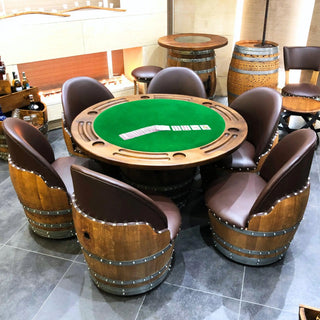
Real barrel oak carries character no amount of paint or trim can fake. Our bars are built from 1-inch solid oak Wine Barrel staves with authentic wine staining from the years the wood spent aging Bordeaux-type wine. Drop a piece like that into a plain basement and the whole room organizes around it, suddenly you have a reason for the space, a natural gathering point, and a centerpiece that looks like it cost far more thought than it did. That's why the barrel comes first in every good basement bar plan.
Step 1: Place the bar to define the room
Before anything else, decide where the bar lives, because everything else follows from it. In a basement, you want the bar against a solid wall, ideally one visible as you come down the stairs, so the space announces itself the moment you arrive.
Give the bar a little breathing room in front for stools and standing guests. If your basement is long, the bar can help split it into zones, bar at one end, seating or a game area at the other. Position it near any existing plumbing or a small fridge if you have them, but the bar itself is the anchor. Get its placement right and the rest of the layout falls into place around it.
Step 2: Add storage with a barrel cabinet
A working basement bar needs somewhere to keep bottles, glassware, and the odds and ends of hosting. A matching barrel cabinet handles this while keeping the whole setup visually consistent, no mismatched storage breaking the spell.
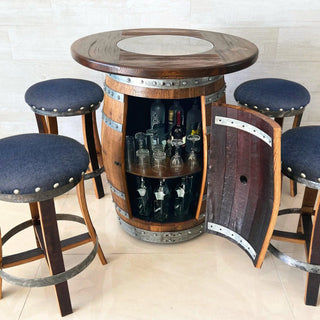
The double barrel bar cabinet is built for exactly this role: closed storage for bottles and gear, a working surface on top, and the same genuine barrel oak as the main bar, so the two pieces read as one intentional setup. Place it beside or behind the bar as a back-bar station. Now you've got a real service area, pour at the bar, restock from the cabinet, without the clutter that makes a home bar feel improvised.
Step 3: Bring in seating that invites lingering
A basement bar is for staying a while, so the seating has to earn its keep. Stools at the bar are non-negotiable, and comfortable ones keep guests perched through a long evening rather than drifting to the couch.
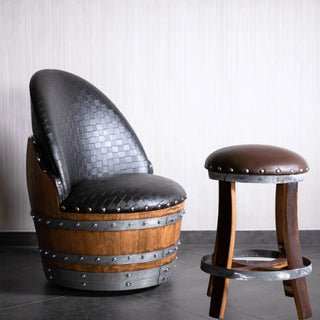
Genuine barrel stools tie the seating to the bar and the cabinet, keeping the whole room cohesive. Plan for enough to seat the crowd that usually gathers, two to four for most basements, more if you entertain big. If comfort is a priority, hydraulic stools that adjust and swivel keep everyone at the right height and let them turn toward the conversation or the screen. Seating is what turns a bar you look at into a bar you use.
Step 4: Install a foot rail for the finishing touch
This is the detail that makes a basement bar feel like a real one. A foot rail runs along the base of the bar, giving standing guests somewhere to rest a foot and delivering the unmistakable feel of an authentic pub.
A genuine barrel foot rail made from the same oak as the rest of the setup is the small addition with a big payoff. It's the touch that makes guests comment that the space feels like a proper bar, not a basement with bottles. Skip it and the bar feels slightly unfinished; add it and everything clicks into place.
A basement bar build checklist
Here's the full plan in order, so you can build it piece by piece over time or all at once:
| Step | Piece | Role |
|---|---|---|
| 1 | Barrel bar | The centerpiece the room is built around |
| 2 | Barrel cabinet | Back-bar storage and a second surface |
| 3 | Barrel stools | Seating that keeps guests at the bar |
| 4 | Foot rail | The authentic pub-feel finishing touch |
| 5 | Lighting | Warm, layered light to fight the basement gloom |
| 6 | Zoning | Separate bar, seating, and game areas |
Work down the list and the room comes together in a logical order, with the centerpiece anchoring every step.
Don't forget the lighting
Basements are naturally short on natural light, which makes artificial lighting even more important than it is upstairs. Overhead fixtures alone will make the space feel flat and utilitarian. Layer it instead: something over the bar, accent lighting around the seating, and a low warm source or two to fill in the corners. Warm bulbs and a dimmer transform a basement from a storage feeling to a retreat feeling, and they make the oak tones of the barrel furniture glow. It's a low-cost step with an outsized effect on the whole room.
Build it to last, because basements get used
A basement bar, once it exists, gets used, game nights, weekends, the overflow from every gathering upstairs. The furniture has to hold up to years of real hosting. That's the case for building around genuine, well-made pieces rather than flat-pack stand-ins that loosen and mark up fast.
Everything we make is handcrafted in our family workshop from solid oak Wine Barrel staves, hand-wirebrushed and sealed with a durable spar-varnish finish built to take poured drinks, set-down glasses, and years of elbows on the bar. These are heirloom pieces meant to anchor the room for the long haul. And because they ship free and insured in the continental U.S., palletized as freight with a scheduled delivery appointment for the large sets, getting a substantial bar into a basement is far easier than it sounds.
Dress the walls and finish the details
With the furniture and lighting handled, the last layer is what goes around them, and it's where a basement bar gains real personality. Bare basement walls behind a beautiful barrel bar are a missed opportunity. A mirror behind the bar makes the space feel larger and bounces your lighting around, a trick real bars have used forever. Shelving beside the bar gives glassware and favorite bottles a home while adding to the display. A rug underfoot and a few framed pieces warm the room and dampen the hard-surface echo basements are prone to.
Keep the styling consistent with the genuine oak you've built around, warm tones, honest materials, nothing that fights the character of the barrel. The goal is a space that feels intentional and inviting the moment you reach the bottom of the stairs, not a collection of parts. When the walls are dressed, the light is warm, and the bar is stocked and ready, the basement stops feeling like the level you store things on and starts feeling like the one you head to first.
Build the basement bar you'll actually come down for
A basement doesn't become a destination on its own, it needs a reason to go down there. A genuine oak barrel bar is that reason. Anchor the room with it, add a matching cabinet for storage, seat it properly, finish it with a foot rail, and get the light right, and you've turned a forgotten level of the house into the room everyone wants to be in.
When you're ready to start, our barrel bars, cabinets, stools, and foot rails are all handcrafted from genuine Wine Barrel oak and built to be the centerpiece your basement's been missing.
About Oak Wood Wine Barrels — A family workshop handcrafting authentic Bordeaux-oak Wine Barrel furniture. 4.9-star rated, 4,000+ orders shipped. Shop our collection at obarrel.com.