
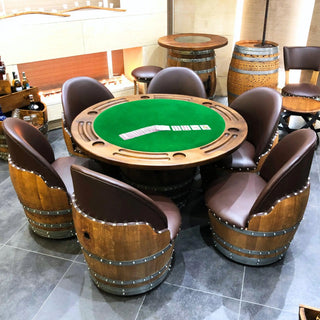
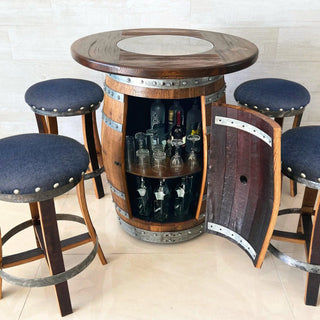
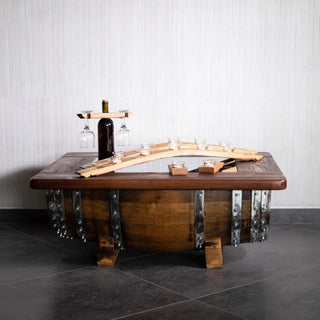
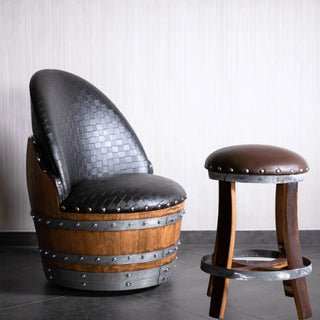
A sunroom bar is an enclosed, glass-wrapped hosting space anchored by a wine barrel bar or barrel-top table, designed to feel like indoor living with daylight on tap. The right setup turns a three-season room into the most-used square footage in the house from March through November, and on warmer days in winter. The key is treating the sunroom like an interior room with a view — not an outdoor patio — and choosing furniture, finishes, and lighting that respect the swing in temperature and humidity behind that glass.
Below are ten sunroom decor ideas that work specifically with wine barrel furniture. Each one assumes the room is enclosed (windows, screens, or sliding glass on three sides) and that you want a setup that survives a humid July afternoon and a sunny February brunch with equal grace.
Wine barrel furniture earns its place in this room because authentic Bordeaux oak — the kind we cut and re-finish in our family workshop — was built to live with moisture. A wine barrel held 53 to 59 gallons of wine for two to four years before retirement. The staves are dimensionally stable, the cooperage is tight, and a quality spar-varnish finish handles the temperature swing of a three-season room far better than veneered MDF or untreated softwood. The Forest Products Laboratory has long documented that white oak moves predictably across moisture content shifts — a key reason coopered barrel staves survive decades of wet-to-dry cycling [Source: AUTHORITATIVE SOURCE NEEDED — USDA Forest Products Laboratory Wood Handbook].
What defines a true three-season room — and separates it from a year-round addition — is whether the space carries its own HVAC tie-in. A three-season room is typically built without conditioned heat and air, relying on the adjacent house envelope plus screens or single-pane windows; a four-season room is insulated, sealed, and ducted. Real-estate listings and remodeler guidance commonly cite a three-season window of roughly March through November in USDA hardiness zones 5 and 6, with the room going dormant during the coldest weeks [Source: AUTHORITATIVE SOURCE NEEDED — National Association of Home Builders sunroom remodeler guidance]. The furniture decisions below all assume the unheated case; for a true four-season room, the humidity and finish risks drop and the seating choices widen.
1. Anchor the room with a single barrel bar against the longest interior wall
A barrel bar anchored against the longest solid wall — typically the wall shared with the house — gives a sunroom its visual center without blocking the view. Place the bar so guests face the windows when standing at it. The bar itself becomes the working surface; the windows become the wallpaper.
A full barrel bar sits 42 inches tall, the standard counter height for two bar stools or one Captain's Chair. In a 12-by-14-foot sunroom, that footprint takes up roughly six percent of the floor and serves as a station for pouring, plating cheese, or staging dessert. Leave 36 inches of clear floor in front for guest movement, and tuck a small cart or stave shelf beside it for glassware. Browse our wine barrel bar collection at obarrel.com for size options that fit the wall you have.
2. Use a barrel-top bistro set for daylight dining without crowding the windows
A 30-inch round barrel-top bistro table with two Captain's Chairs gives you a true daylight dining spot using less than 16 square feet. This is the configuration most three-season rooms benefit from: enough surface for two breakfast plates, two coffees, and a small flower arrangement, without the visual mass of a four-top.
Set it 18 to 24 inches off the window line so morning sun warms the seats but the table doesn't bake. The barrel-top surface, finished in spar varnish, handles condensation from cold drinks in August without water rings. If you upsize to a 36-inch pub-height table, you trade some intimacy for room to plate a charcuterie board.
3. Manage humidity with a portable hygrometer and a ceiling fan
Three-season rooms swing humidity hard. A glass-enclosed room in the Midwest can run 35 percent humidity in February and 75 percent in July. Wine barrel furniture handles that range because the oak was already conditioned by wine, but you can extend the life of any finish by keeping the room between 40 and 60 percent humidity when possible.
A $25 digital hygrometer on the bar tells you when to crack a window or run a dehumidifier. A ceiling fan on low circulates air, which prevents the still pockets where condensation builds on glass and pools on horizontal surfaces. The American Society of Heating, Refrigerating and Air-Conditioning Engineers (ASHRAE) recommends indoor relative humidity between 30 and 60 percent for comfort and material longevity.
4. Build a year-round versus three-season finish plan
Plan your finishes around how the room is used in January. If you heat the sunroom — even a space heater on weekend mornings — you can run the same furniture year-round. If the room genuinely closes for winter, plan to either drape furniture or move pieces inside during the coldest weeks.
A wine barrel bar finished with marine-grade spar varnish (our workshop standard) tolerates a closed, unheated sunroom in zones 5 and 6 if the room stays above freezing and humidity doesn't condense visibly on surfaces. If you see condensation on your glass, you'll eventually see it on furniture. A light wipe-down with a dry microfiber cloth twice a week through the wettest months keeps surfaces clear.
5. Layer lighting that bridges daylight and evening
A sunroom needs three light layers: daylight (the windows), an evening overhead source, and a low warm source for after dark. The mistake is leaning on one overhead fixture and watching the room go flat the moment the sun drops.
Hang a single low-glow pendant or a small chandelier over the barrel bar at 32 to 36 inches above the surface. Add one floor lamp with a warm 2700K bulb in the seating corner. Then add a candle or two on the barrel top for evening service. Three layers, three switches. The room reads warm at 9 p.m. and still feels open at 9 a.m.
6. Choose seating that handles the temperature range
Captain's Chairs built from reclaimed barrel staves give you sculptural seating that doesn't fade in direct sun the way upholstered pieces do. The wood patina deepens over time. A pair of stave-back Captain's Chairs at the bar reads as a design choice; a pair of vinyl bar stools reads as an afterthought.
If you want a softer corner, add one fabric armchair on the wall farthest from direct sun — the south or west window if you're in the Northern Hemisphere — and rotate slipcovers seasonally. A wool throw on the chair from October through April and a linen one from May through September keeps the corner reading correctly without re-buying furniture.
7. Stage a beverage station that flexes from coffee to cocktails
The single most-used surface in a sunroom is the one that holds a drink. Set up the barrel bar as a true beverage station that flexes: pour-over coffee setup on the left in the morning, bar tools and a small ice bucket on the right after 5 p.m.
A 12-by-18-inch tray defines each zone. Use one tray for the AM station (kettle, grinder, mug rack), one for the PM station (jigger, shaker, two bottles, glassware). Swap trays in 90 seconds. You get two rooms out of one piece of furniture.
8. Add a stave wine rack or Glencairn display for the back wall
A vertical stave-built wine or whiskey display fills the visual space behind the bar without crowding the bar surface itself. A six-glass Glencairn display rack mounted at 60 inches gives bourbon dads a reason to stand at the bar; a 12-bottle stave wine rack does the same for wine drinkers.
Either piece reads as collected, not cluttered, because the material echoes the bar itself. If you're starting from scratch, browse tops, rails, and accessories at obarrel.com for pieces that match the wood tone of your barrel bar.
9. Plan flow for four guests, six guests, and one quiet morning
A sunroom that only works at one occupancy doesn't get used. Sketch three layouts: solo morning coffee, four-guest evening drinks, and six-guest holiday brunch. The barrel bar stays put; the seating moves.
Solo: one Captain's Chair pulled up to the bar, one armchair in the corner. Four-guest: two Captain's Chairs at the bar, a bistro table with two more chairs by the windows. Six-guest: bar pulled six inches off the wall to create a back-side approach, bistro table cleared as a buffet, four folding chairs brought in from a closet. The room flexes because the centerpiece is fixed.
10. Treat the room like indoor decor, not outdoor decor
The defining mistake in sunroom decor is treating it like a covered patio. A covered patio uses outdoor-rated materials, weather-tolerant cushions, and a casual feel. A three-season room is an interior room with windows on three sides. The furniture, rugs, art, and lighting should match the rooms it connects to inside the house.
That means real wood furniture, real art on the walls (not seasonal yard signs), a proper rug that works year-round, and finishes that read intentional. Wine barrel furniture leans into this approach because it's built to interior furniture quality, not patio-set quality. A wine barrel bar in a sunroom should look like it could live in your dining room — and on the days the weather turns, it sometimes will.
Quick reference: ten sunroom barrel bar moves
| # | Move | Why it works in a three-season room |
|---|---|---|
| 1 | Barrel bar on the longest interior wall | Anchors the room without blocking the view |
| 2 | Barrel-top bistro set | Daylight dining for two in 16 sq ft |
| 3 | Hygrometer + ceiling fan | Keeps humidity in the 40–60% sweet spot |
| 4 | Year-round vs three-season finish plan | Decides whether to heat, drape, or move |
| 5 | Three-layer lighting | Bridges noon and 9 p.m. equally well |
| 6 | Captain's Chairs at the bar | Stave wood handles temp swings, no fade |
| 7 | Flex tray system on the bar | AM coffee station, PM cocktail station |
| 8 | Vertical stave display | Adds visual depth without crowding |
| 9 | Three layout sketches | Solo, four-guest, six-guest plans |
| 10 | Treat it as interior decor | No "patio" cues — match the house inside |
Care tips specific to enclosed sunrooms
A few maintenance habits extend the life of any wood furniture in a glass-walled room:
- Wipe condensation off horizontal surfaces within 24 hours. The spar varnish on a quality barrel bar resists rings, but standing water over weeks will eventually mark any finish.
- Rotate seating positions quarterly so no single chair faces direct sun all year. Sun-side seats develop a lighter patina over time, which can read as intentional contrast or as fading depending on how you manage it.
- Re-coat high-touch surfaces every three to five years. A bar top sees more hand contact than any other surface. A light re-coat of spar varnish keeps the finish even.
- Use felt pads under glassware at the bar to extend the finish life on the most-used spot.
These steps take five minutes a week and add years to the look of the room.
What sunroom decor ideas have in common when they work
Across thousands of sunroom installations we've seen through OWWB customer photos, the ones that get used most share three traits: a single piece of real furniture as the centerpiece, lighting designed for after sunset as much as before, and a seating plan that handles both two people and six. A wine barrel bar checks all three because it's an anchoring piece, it accommodates pendant lighting overhead, and it serves either two stools or a full standing crowd.
The three-season room is one of the most rewarding spaces in a home to design well because it gets used in ways the formal living room never does. Sunday morning coffee, Wednesday evening pour, Saturday afternoon book — and once a season, the eight-person Thanksgiving overflow. A barrel bar handles all of those occasions because authentic oak was built to handle ten years of wine production. A few seasons of hosting are well within its tolerance. Sunroom additions also continue to show strong resale return — remodeling cost-versus-value reports consistently place enclosed three-season additions among the higher-ROI livable-space projects [Source: AUTHORITATIVE SOURCE NEEDED — Remodeling Magazine Cost vs. Value Report]. The furniture you choose for the room should reflect that long-term thinking.
If you're starting from a bare three-season shell, the fastest path to a hosting-ready setup is to anchor with a wine barrel bar from obarrel.com, add a stave-built display from our tops, rails, and accessories collection, and layer the lighting, seating, and tray system from the moves above.