
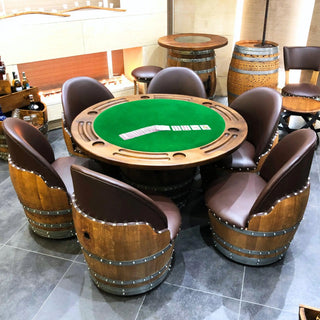
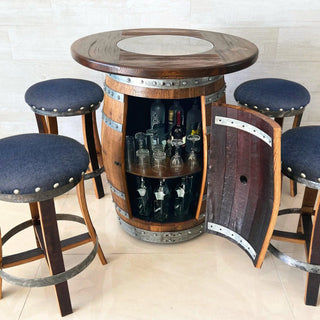
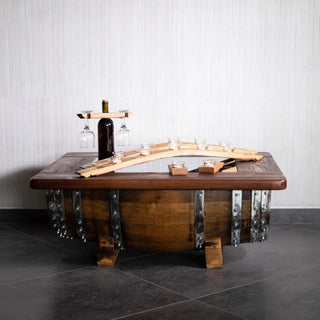
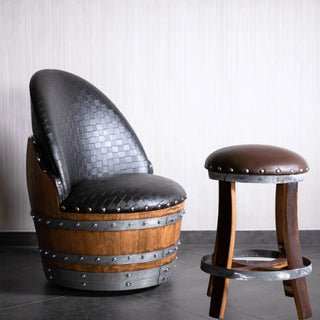
When something is a gift, "American-made and handcrafted" stops being a marketing line and becomes the whole point: a piece made by hand carries a permanence, a story, and a sense of care that mass-produced gifts simply can't. The reason a handmade gift lands harder is that the recipient can feel the difference — in the weight of it, in the details, in the fact that it wasn't stamped out by the thousand. This is a plain look at why craftsmanship changes what a gift means, and how to think about it when you're choosing something for someone who matters.
You can see the difference across our full collection, but the point isn't any single piece — it's what handmade does to a gift in general. Let's walk through it.
A gift is a message, and craftsmanship changes the message
Every gift says something beyond the object itself. A last-minute, mass-produced item says "I got you something." A handcrafted piece made by real people says "I chose this carefully, and I wanted you to have something that lasts." The recipient reads that message whether or not they could put it into words.
That's the core reason craftsmanship matters more for gifts than for ordinary purchases. When you buy for yourself, function is often enough. When you give to someone, the meaning is half the gift — and meaning is exactly what handmade work carries that factory output doesn't.
What "handcrafted" actually means here
"Handcrafted" gets used loosely, so it's worth being concrete about what it involves. In our family workshop, every piece is made by hand from genuine retired oak Wine Barrels — barrels that held wine for years before being given a second life as furniture. That means:
- Real material with a history. One-inch solid oak Bordeaux-type Wine Barrel staves, not veneer or particleboard dressed up to look like wood.
- Hand-finishing you can see. Hand-wirebrushed tops, a spar-varnish finish, and authentic wine staining that no two pieces share identically.
- Details built for use. Custom tufted memory-foam upholstery on seating, hidden seat storage, and casters on chairs — the marks of something made to be lived with, not just looked at.
Those aren't cosmetic claims. They're the difference between an object assembled to a price and one built by people who care how it turns out.
Why "one of a kind" matters to the person receiving it
Mass-produced gifts are, by design, identical — a thousand copies of the same thing. Handcrafted pieces aren't. Because each barrel aged differently and each piece is finished by hand, the natural wine staining and grain make every item genuinely one of a kind. The gift the recipient gets is theirs in a way a catalog item never is.
That uniqueness does real emotional work. It tells the recipient that what they're holding isn't interchangeable — it exists once, and it came to them. For a milestone gift especially, that sense of singularity is a large part of why the piece gets kept and treasured rather than absorbed into the pile of forgettable presents.
Permanence: the gift that's still here in ten years
Most gifts have a short life. They're consumed, they wear out, they go out of style, they get replaced. A well-made piece of furniture does the opposite — it settles into a home and stays, often for decades. That permanence is the quiet superpower of a handcrafted gift.
Think about what that means over time. The recipient doesn't just enjoy your gift on the day they open it; they use it, live around it, and are reminded of you every time they do. A handmade barrel table is where they'll host dinners for years. A barrel stool is where they'll sit for the evening pour long after the occasion that prompted the gift. That long tail of use and memory is something no disposable gift can offer, and it's the strongest argument for choosing craftsmanship when it counts.
The story that travels with a handmade gift
Handcrafted gifts come with something extra that factory gifts lack: a story worth telling. When the material has a history — oak that aged wine before becoming furniture — and the making has a face — an American family workshop rather than an anonymous production line — the gift arrives with a narrative attached.
That story becomes part of the recipient's experience of the piece. When a guest asks about the barrel table in their dining room, they get to explain where the oak came from and who made it. Your gift keeps introducing itself, keeps starting conversations, keeps reminding everyone who sees it that it was something special. A mass-produced gift has no such story; it's just a thing.
Why American-made adds meaning for many recipients
For plenty of people, where a thing is made matters — not as a slogan, but as a value. Giving something built by an American family business rather than mass-produced overseas says something about the care you put into the choice. It supports the kind of small, skilled work that's increasingly rare, and it signals that you looked for quality and provenance rather than the cheapest option that shipped fastest.
You don't need to make a speech about it. The fact of it is enough: a recipient who cares about these things notices, and one who hasn't thought about it often finds they appreciate it once they know. Either way, "made by an American family workshop" is a detail that adds to the gift rather than subtracting from it.
How to weigh craftsmanship when you're choosing a gift
If you're deciding between a handcrafted piece and an easier, cheaper option, a few questions cut through it:
- How long do you want this gift to last? If the answer is "years," craftsmanship isn't a luxury — it's the requirement.
- Does the relationship warrant something singular? For the people who matter most, a one-of-a-kind piece matches the relationship in a way an identical mass-market item can't.
- Do you want the gift to keep working after the day? A handmade piece with a story keeps giving — in use, in conversation, in memory — long after the wrapping's gone.
If those answers point toward something lasting and meaningful, craftsmanship is the deciding factor. And if you want to start smaller, even a handcrafted barrel accessory carries the same made-by-hand character as the larger pieces — a real, thoughtful gift at any budget.
The difference you can feel in person
Some of what handcrafting adds is hard to describe on a page but obvious the moment someone touches the piece. There's a heft to solid oak that veneer can't fake. There's a depth to hand-applied finish and real wine staining that printed grain never matches. And there's a subtle irregularity — the mark of a human hand rather than a machine — that reads as character instead of a flaw.
Recipients register all of this without analyzing it. They run a hand along the top, feel the weight when they move it, notice that it doesn't look like the thing in everyone else's home, and conclude, correctly, that it's better. That instinctive read is the whole payoff of choosing craftsmanship for a gift: the person you're giving to can tell it's real, and they can tell you cared enough to give them something real. No label or product description does that work — the object does it, every time they use it.
The bottom line
American-made and handcrafted matter most precisely when something is a gift, because a gift is judged not by what it does but by what it means. Craftsmanship gives a gift permanence, uniqueness, a story, and an unmistakable sense of care — the exact qualities that separate a present someone keeps for decades from one they forget by spring. When the person matters, let the making match. That's the whole reason handmade is worth choosing: it turns an object into something the recipient holds onto, and remembers you by.
About Oak Wood Wine Barrels — A family workshop handcrafting authentic Bordeaux-oak Wine Barrel furniture in America. 4.9-star rated, 4,000+ orders shipped. Shop our collection at obarrel.com.