
Wine Barrel Furniture vs. Traditional Rustic Furniture: What’s the Difference (and Why It Matters)
When most people hear rustic furniture, they kind of picture the same thing… heavy wood, darker tones, farmhouse vibes, maybe something that looks like it belongs in a cabin somewhere in Colorado.
And don’t get me wrong—that style still works. It’s popular for a reason.
But wine barrel furniture? It’s a different conversation.
It technically falls into “rustic,” sure. But it doesn’t feel like the same category once you actually see it in a real space. It’s got more shape, more personality, and honestly… more presence. It’s one of those things where once you notice the difference, you can’t really unsee it.
I’ve seen people assume it’s just another version of distressed wood furniture. It’s not. Not even close.
At Oak Wood Wine Barrels, that difference is kind of the whole point. You’re not just getting a rustic look. You’re getting something built from real oak barrels—or at least inspired by that structure—which already carries character before it even becomes furniture.
And that changes everything.
Rustic Furniture and Wine Barrel Furniture Aren’t Actually the Same Category
So here’s the simplest way to think about it.
Traditional rustic furniture is a style. It’s broad. It covers everything from reclaimed wood tables to farmhouse cabinets to pieces that are… let’s be honest… just made to look old.
Some of it’s handcrafted. Some of it’s mass-produced with a “weathered” finish slapped on.
Wine barrel furniture is way more specific.
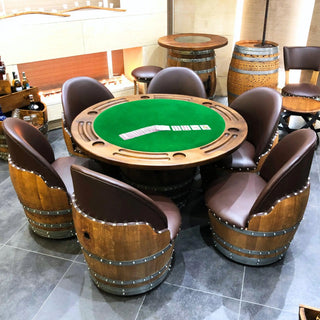
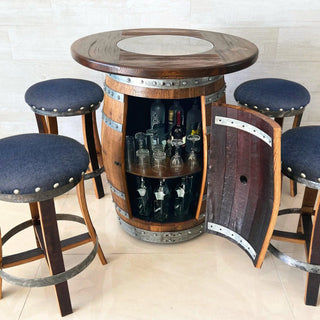
It’s built around the structure and feel of actual barrels—curved oak staves, metal hoops, rounded shapes, real wood grain that wasn’t artificially distressed. That alone puts it in a different lane.
A typical rustic coffee table? Usually a rectangle. Straight lines. Maybe some intentional imperfections.
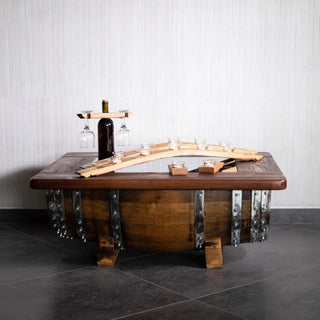
A wine barrel coffee table? Completely different vibe. The shape alone makes it stand out. It doesn’t need fake character—it already has it.
And that’s the thing… one gives you the idea of rustic. The other actually feels like it came from somewhere.
Traditional Rustic Furniture Blends In. Barrel Furniture Stands Out.
Here’s something I’ve noticed over time.
A lot of rustic furniture today is designed to be “safe.” It fits the category, it matches everything, it doesn’t really take risks.
That’s fine… until your whole room starts feeling a little flat.
Wine barrel furniture doesn’t really do “flat.”
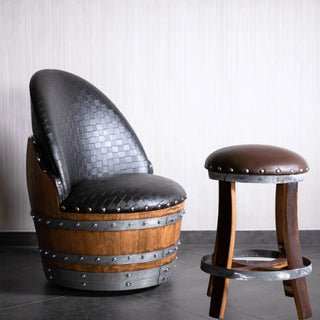
It stands out without trying too hard. A barrel coffee table, a cabinet, even a set of chairs—it pulls attention naturally. Not in a loud way, just in a “this is different” kind of way.
And honestly, that’s usually what people are missing in their space.
Why that actually matters in a real home
You can have a room full of decent furniture… and it still feels like something’s off.
Usually it’s because everything looks like it came from the same place. Same lines, same finishes, same feel.
Barrel furniture breaks that up.
The curves help. The oak grain helps. Even the metal hoops or the way the wood is shaped—it adds texture and movement without overcomplicating things.
It just feels more alive.
The Material Story Feels Different (Even If You Don’t Think About It)
This part is subtle, but it matters more than people realize.
Traditional rustic furniture can be made from all kinds of stuff—solid wood, veneers, engineered materials, whatever. Sometimes it’s great quality. Sometimes… not so much.
Wine barrel furniture usually has a tighter story behind it.
It’s tied to oak. To barrels. To something that had a purpose before it became furniture.
And even if someone can’t explain why they like it better, they feel it.
There’s something about wood that’s already lived a life that just hits differently. It doesn’t feel staged or manufactured.
I mean, think about it—would you rather have something that looks aged, or something that actually carries that kind of character naturally?
Most people don’t overthink it. They just go with what feels better.
The Shape Changes Everything (Seriously)
This is one of the biggest differences, and people usually don’t realize it until they see both styles side by side.
Traditional rustic furniture is mostly straight lines. Thick, heavy, rectangular shapes.
Solid… but sometimes a little rigid.
Wine barrel furniture brings in curves—and that changes the whole feel of a room.
A round barrel table, a curved cabinet, even a small side piece—it softens everything. It makes the space feel less boxy, less structured.
And honestly, more inviting.
It even changes how people interact with the space
This sounds small, but it’s not.
Round or curved furniture naturally creates better flow. People gather around it differently. It feels more social.
A barrel coffee table or pub table almost pulls people in without trying.
Straight-line furniture can still work—but it doesn’t have that same effect automatically.
Mass-Market Rustic Furniture Chases the Look. Barrel Furniture Carries the Identity.
This is probably the biggest difference when you zoom out.
A lot of rustic furniture today is trying to recreate something—heritage, craftsmanship, age.
Sometimes it works. Sometimes it feels a little… forced.
Wine barrel furniture doesn’t really have to try.
The material already has a story. The shape already has identity. The look comes naturally from how it’s built.
And that’s why it feels more real.
At Oak Wood Wine Barrels, the pieces aren’t just decorative—they’re functional too. Coffee tables, chairs, cabinets, bar setups… stuff you actually use every day.
So it’s not just a “cool idea.” It’s furniture that happens to have a stronger identity than most.
Wine Barrel Furniture Is Way More Versatile Than People Expect
A lot of people assume barrel furniture only works in very specific settings—like wineries or cabins.
That used to be true.
Not anymore.
Now you see it in all kinds of spaces—modern homes, home bars, patios, even more polished interiors where you just need one strong piece to anchor everything.
And that’s kind of the key.
You don’t need a whole room full of it. Sometimes one piece does the job.
A barrel coffee table. A cabinet. A couple chairs.
That’s enough to change the entire feel of a space.
Traditional rustic furniture usually requires more commitment. Once you go that route, everything kind of has to match.
Barrel furniture gives you more flexibility.
So Why Does This Actually Matter?
Because this isn’t just about style.
It’s about what your space feels like when you walk into it.
If you go with standard rustic furniture, you’ll probably get something that looks good and does the job.
But if you’re trying to create something people notice—even if they can’t explain why—barrel furniture usually gets you there faster.
It adds character without overthinking it.
It gives the room something to revolve around.
And it just feels… less replaceable.
That’s probably the best way to put it.
When Traditional Rustic Furniture Still Makes Sense
To be fair, there are times when traditional rustic furniture is the right call.
If you’re furnishing a whole house at once, trying to keep things simple, or working within a tighter budget, it can make things easier.
It blends well. It’s predictable.
And sometimes that’s exactly what you want.
But if you’re choosing a centerpiece—or anything that’s supposed to stand out a little—that’s where wine barrel furniture usually wins.
Why Oak Wood Wine Barrels Fits This So Well
Oak Wood Wine Barrels isn’t trying to imitate rustic style.
That’s the difference.
The pieces come from real inspiration—barrels, oak, craftsmanship—and they’re built to actually be used, not just looked at.
Whether it’s a coffee table, a bar setup, a cabinet, or something smaller, the goal is the same: create something that feels like it belongs in the space, but still stands out.
And once you start noticing that difference, it’s hard to go back to the generic stuff.
Our Links
- Explore handcrafted wine barrel furniture — https://www.obarrel.com
- Shop rustic oak tables, chairs, and cabinets — https://www.obarrel.com
- Browse home bar and barrel furniture collections — https://www.obarrel.com
Other Resources to Check Out!
- USDA Forest Products Laboratory (Wood & Oak Research) — https://www.fpl.fs.usda.gov
- EPA Wood Material Sustainability Data — https://www.epa.gov
- General Oak Wood Properties & Uses — https://www.research.fs.usda.gov
This blog post is for informational purposes only and its contents are subject to change.