
A Beginner’s Guide to Wine Barrel Aging: How Oak Shapes Flavor
If you’ve ever taken a sip of wine and thought,
“Okay… why does this taste like vanilla? Or spice? Or something a little smoky?”
You’re not imagining it.
And no—those flavors usually aren’t being added in.
A lot of that comes from the barrel.
Not the grapes. Not the bottle.
The barrel.
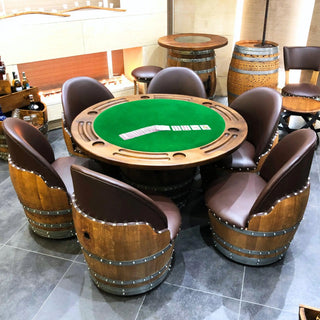
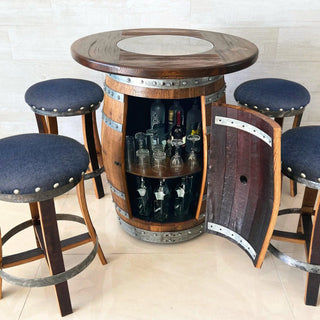
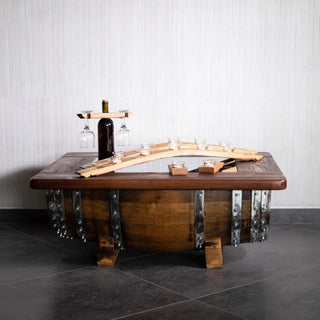
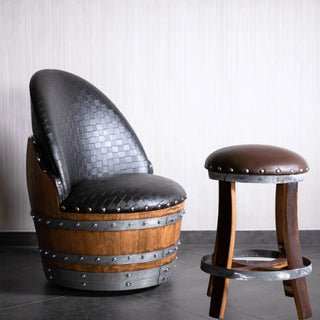
And once you start to understand that, it changes how you think about wine… and honestly, it makes wine barrel furniture a lot more interesting too.
Because that same material—the oak—is doing something very real before it ever becomes part of a table or a chair.
So let’s break this down in a way that actually makes sense without getting overly technical.
First, What Does “Barrel Aging” Even Mean?
At its simplest, barrel aging is exactly what it sounds like.
Wine is stored in a wooden barrel—usually oak—for a period of time before it’s bottled.
That time can vary.
Sometimes a few months. Sometimes years.
But it’s not just about storing the wine
It’s about what happens during that time.
Because the wine and the wood are interacting.
The barrel isn’t just holding the liquid—it’s influencing it.
And that influence shows up in the final flavor.
Why Oak? (Why Not Another Type of Wood?)
This is a good question—and it’s not random.
Winemakers could use other woods.
They don’t.
Oak has a really specific combination of qualities
- It’s strong and durable
- It can be shaped into barrels without cracking
- It allows a small amount of oxygen to pass through
- It adds flavor without overpowering everything
That last part is key.
Because you want the wine to still taste like wine—not like wood.
Oak hits that balance.
How Oak Actually Changes the Flavor
This is where things get interesting.
When wine sits in an oak barrel, a few things happen at the same time.
1. Flavor compounds move from the wood into the wine
This is where those familiar notes come from:
- Vanilla
- Spice
- Toast
- Sometimes a slight smokiness
These aren’t added later.
They come from the wood itself.
2. Oxygen slowly interacts with the wine
Barrels aren’t completely airtight.
Tiny amounts of oxygen pass through the wood over time.
And that softens the wine.
It smooths out harsh edges.
Makes it feel more balanced.
3. Time does its thing
This part sounds obvious—but it matters.
Sitting in the barrel allows everything to integrate.
Flavors settle. Structure changes. The wine becomes more cohesive.
New Barrels vs. Used Barrels (This Changes Everything)
Not all barrels have the same impact.
This is a big one.
New barrels have a stronger influence
More flavor. More noticeable changes.
That’s where you get those bold vanilla or toasted notes.
Used barrels are more subtle
After a few uses, the wood has already given up a lot of its flavor.
So the impact becomes softer.
More about texture and balance than strong taste.
And eventually, the barrel becomes neutral.
Which is… actually important.
Because that’s when it moves on to its next stage.
French Oak vs. American Oak (Why People Talk About This So Much)
You’ll hear this a lot if you spend any time around wine.
French oak. American oak.
Here’s the simple version
French oak tends to be:
- More subtle
- More refined
- Less in-your-face
American oak tends to be:
- Bolder
- More noticeable
- Slightly sweeter or more pronounced
Neither is better.
It just depends on what the winemaker is going for.
And interestingly… those differences don’t completely disappear when the barrel becomes furniture.
The Role of Toasting (Yes, They Literally Toast the Barrel)
This part surprises people.
Barrels are actually heated during the making process.
That “toast level” affects the flavor
Light toast → more subtle wood influence
Medium toast → balanced flavor
Heavy toast → more smoky, bold characteristics
So even before the wine goes in, the barrel is already set up to influence the final result.
It’s kind of like seasoning a pan before you cook with it.
When the Barrel Stops Affecting the Wine
This is where everything connects back to your world.
After a few cycles, the barrel stops contributing much flavor.
It becomes neutral.
And that’s when winemakers move on
Not because the barrel is broken.
Not because it’s useless.
Just because it’s done with that job.
But the material?
Still strong. Still solid. Still full of character.
And that’s where the next stage begins.
Why This Makes Wine Barrel Furniture More Interesting
Once you understand what the barrel has done before it reaches you… it changes how you look at it.
It’s not just wood
It’s wood that:
- Held wine
- Influenced flavor
- Aged over time
- Went through multiple cycles of use
That history doesn’t disappear.
It shows up in the grain, the tone, the feel of the material.
And that’s part of what makes it different from standard furniture.
You Don’t Have to Be a Wine Expert to Appreciate It
This is important.
You don’t need to know tasting notes.
You don’t need to understand every technical detail.
You just need to know that there’s a story behind it
That the material has been through something.
That it wasn’t just cut and shaped into furniture from scratch.
And once you know that, it adds another layer to the piece.
Why People Connect With This Without Realizing It
Most people don’t sit down and think:
“This table influenced wine flavor before it got here.”
They just feel something different about it
It has presence.
It feels grounded.
It doesn’t feel temporary.
And that’s coming from everything the material has already gone through.
Where Oak Wood Wine Barrels Fits Into This
Oak Wood Wine Barrels works with real barrels that have gone through this exact process.
Not recreated materials. Not simulated finishes.
Actual barrels that were used, aged, and then repurposed
So when you bring one of these pieces into your home, you’re not just adding furniture.
You’re continuing something that already had a purpose.
At the End of the Day, It’s All About the Material
That’s really what this comes down to.
Oak isn’t just a material.
In this case, it’s part of a process.
From vineyard… to barrel… to your space
And once you see that full path, it makes the final piece feel a little more meaningful.
Even if you never think about it again after that.
Our Links
- Explore wine barrel furniture made from real oak barrels — https://www.obarrel.com
- Shop handcrafted barrel tables, chairs, and décor — https://www.obarrel.com
- Browse rustic oak furniture with natural character and history — https://www.obarrel.com
Other Resources to Check Out!
- Wine Folly (Beginner Wine Education Guides) — https://winefolly.com
- Wine Spectator (Barrel Aging & Flavor Influence) — https://www.winespectator.com
- VinePair (How Oak Affects Wine Flavor) — https://vinepair.com
This blog post is for informational purposes only. While we aim to provide accurate and accessible insight into wine barrel aging and oak influence, winemaking techniques, materials, and outcomes may vary by region, producer, and process. The characteristics of reclaimed barrels used in furniture may also differ based on prior use, aging, and sourcing conditions. Always review product details directly and consider your personal preferences when making purchasing decisions.