
If you give one lasting piece instead of a stack of smaller gifts, the person you love ends up with something they will still be using in twenty years. That is the whole case in a sentence. The rest of this is about why it holds up, and how to know when a single heirloom gift is the right call.
Most of us have done the pile. Five or six wrapped boxes under the tree, each one thoughtful enough, none of them memorable by February. There is nothing wrong with that. But there is a quieter, more confident way to give — and for the right person, on the right occasion, it lands harder than anything you could stack. If you're weighing it this year, it helps to start by looking at our full barrel sets and asking a simple question: would this still matter to them a decade from now?
What "heirloom" actually means
The word gets thrown around, so let's be plain about it. An heirloom is an object built well enough, and meant enough, that it gets handed down. It outlives the occasion. It picks up a story — where it came from, who gave it, the nights it sat at the center of.
A furniture piece earns that word through three things: material that doesn't wear out, construction that doesn't loosen, and a design that doesn't chase a trend it will be embarrassed by in five years. A genuine retired oak Wine Barrel checks all three. The oak already spent years holding wine under pressure before it ever became furniture. The staves are a full inch of solid wood, not veneer over particleboard. And the shape — a barrel — has looked right in a room for as long as barrels have existed.
That is the difference between a gift that gets used and a gift that gets kept.
Why the pile feels generous but the piece feels remembered
Volume feels like generosity in the moment. More boxes, more to open, more to react to. But think back on the gifts you actually remember receiving. Almost none of them were part of a pile. They were the single thing that changed how a room felt, or that you still reach for.
Here is the honest tradeoff, laid out plainly:
| The pile of presents | The one heirloom piece |
|---|---|
| Big reaction on the day | Quieter reaction, longer memory |
| Spread across many small items | Concentrated in one object |
| Most items fade or break within a year or two | Built to last decades |
| Easy to forget who gave what | Always tied to the giver |
| Feels generous immediately | Feels generous every time it's used |
Neither column is wrong. If you're shopping for a child, the pile usually wins — kids want quantity and surprise. But for an adult who already has most of what they need, the second column is almost always the better bet. They don't need more stuff. They need the *right* thing.
The recipients an heirloom gift is built for
Not everyone is an heirloom-gift recipient. The approach fits specific people especially well:
- The person who has everything. When someone can buy their own gadgets, a consumable or a trinket disappears into the pile of things they already own. A handcrafted piece of furniture is something most people won't buy for themselves — which is exactly what makes it a gift.
- A milestone year. A 50th, 60th, or 70th birthday, a retirement, a big anniversary. Milestones ask for a gift with weight to match the moment.
- A couple settling into a home for the long haul. New house, empty nest, finally decorating for themselves — these are people ready to invest in pieces they'll keep.
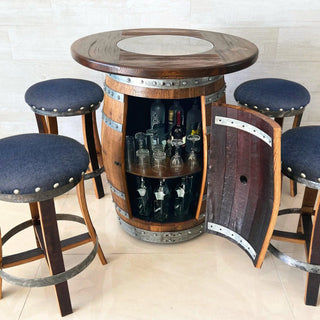
- The host or the whiskey-and-wine lover. Someone who gathers people around them. An heirloom bar or table becomes the thing their friends remember about their home.
If the person you're buying for fits one of those, you already have your answer.
The math nobody runs on holiday spending
Add up a typical pile. Five gifts at fifty to a hundred dollars each and you're often past three hundred, sometimes well past it — and by spring, most of it is worn, outgrown, or forgotten. Put the same money toward one substantial piece and the arithmetic flips. Cost-per-use on a well-built table or bar, spread across twenty years of dinners and gatherings, is almost nothing. The pile is cheaper per box and far more expensive per year of use.
There's also the quiet cost the pile never shows you: the mental clutter of more objects, the landfill of the ones that break, the vague sense that none of it was quite it. A single lasting piece skips all of that. And because we ship free and insured in the continental U.S. with buy-now-pay-later available through Shop Pay installments, spreading the cost of a real gift over a few months is straightforward — you don't have to choose between meaningful and manageable.
The objection worth answering
The honest worry about giving one gift instead of several is that it feels risky — all your eggs in one basket, one reaction to ride on. What if they don't love it? It's a fair concern, and the answer is in how you choose, not whether you go big.
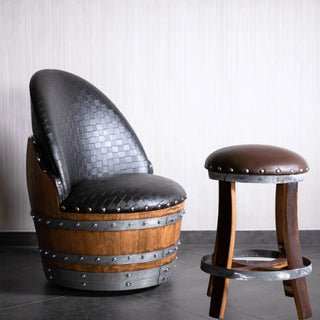
The risk of a pile is spread thin but guaranteed: some of it will miss, some will be forgotten, and none of it will be the thing they remember. The risk of one heirloom piece is concentrated but controllable — because a well-made piece of furniture, matched to a room the person actually uses, is about as safe a bet as gifting gets. Nobody regrets a beautiful, sturdy table. What lowers the risk to almost nothing is picking something functional they'll use daily rather than a decorative gamble. Give a bar to someone who hosts, a chair to someone who reads, a rack to someone who collects, and the gift can't really miss — because it meets them where they already live.
How to choose the one piece
Once you've decided on a single heirloom gift, narrowing it down is easier than it looks. Work backward from the person:
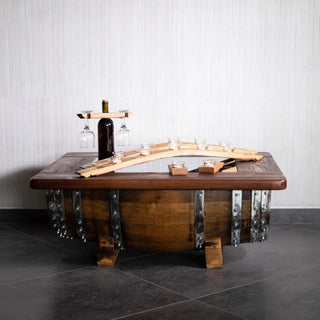
- Where do they gather? If they host, look at bars and pub sets. If they linger over a drink, look at a lounge chair or side table. If they collect, look at wine racks and tasting tables.
- What's the room that never gets used? A formal dining room or an empty corner is often the space a great piece transforms. The gift and the makeover become the same thing.
- How much room is there, honestly? Measure before you buy. A piece that's too big for the space is a burden, not a gift.
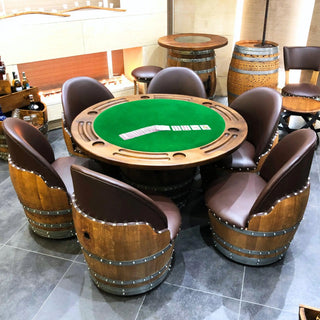
- Do they want to be at the center of it, or beside it? Some people want the showpiece — the flagship 6-chair barrel game table set that anchors a whole room. Others want the quiet companion piece they use alone. Both can be heirlooms.
There's no wrong answer here as long as the piece fits the person and the space. The mistake is buying by category instead of by recipient.
The gift they'll point to
Years from now, someone will admire the piece in their home and ask where it came from. And they'll tell the story — who gave it, the year, the occasion. That is what an heirloom gift buys you that a pile never can: a place in the story of their home.
You don't need to give big every year. But when the occasion is real and the person is right, one lasting piece says something a stack of boxes can't. It says: I thought about you, and I picked something that would still be here.
That's the case. One piece, built to last, remembered for decades. This holiday, it might be the most generous thing you give.
About Oak Wood Wine Barrels — A family workshop handcrafting authentic Bordeaux-oak Wine Barrel furniture. 4.9-star rated, 4,000+ orders shipped. Shop our collection at obarrel.com.