
French Oak vs. American Oak: How the Wood Changes the Wine (and the Furniture)
If you’ve ever gotten even a little into wine, you’ve probably heard this before:
“French oak.”
“American oak.”
It gets mentioned like it’s a big deal—which it is—but no one really explains it in a way that sticks unless you’re deep into wine already.
And then here’s where it gets interesting…
That same difference? It shows up in furniture too.
Not in the exact same way, obviously—but the material, the grain, the feel… it all carries over.
So if you’ve ever wondered why some barrel furniture feels slightly different from others, or why certain pieces have a different tone or texture, it usually comes back to this:
What kind of oak did it start with?
Why Oak Is Used in the First Place (This Part Matters More Than You Think)
Before we even get into French vs. American, it’s worth understanding why oak is the go-to material at all.
Because it’s not just tradition.
Oak has a pretty unique combination of qualities:
- It’s strong and dense
- It can bend without breaking (which is how barrels are formed)
- It holds liquid without leaking
- It ages well over time
Basically—it’s built for both wine and furniture
That’s why it shows up in both worlds.
It works.
And once you understand that, the differences between types of oak start to make more sense.
French Oak: Subtle, Refined, A Little More Controlled
Let’s start here.
In the wine world, French oak is usually associated with subtlety.
It doesn’t overpower the wine—it supports it.
Think of it like background influence, not the main event
It tends to bring:
- Softer tannins
- More delicate flavors
- A smoother, more layered feel
Now, translate that into furniture.
French oak tends to feel more refined
The grain is usually tighter.
The texture can feel a little more uniform.
The overall look leans slightly more polished—even when it’s still rustic.
It’s not flashy.
It’s just… clean, controlled, and balanced.
American Oak: Bold, Noticeable, A Bit More Character Up Front
American oak is kind of the opposite.
In wine, it’s more expressive.
You notice it faster.
It shows up right away
It tends to bring:
- Stronger flavors (vanilla, spice, sometimes a bit of sweetness)
- A more noticeable structure
- A slightly more pronounced presence
Now in furniture…
That translates into more visible character
The grain is usually wider.
The patterns are more noticeable.
There’s a little more variation from piece to piece.
And honestly, that’s part of what people like about it.
It feels more raw. More natural. Less controlled.
How This Actually Shows Up in Barrel Furniture
This is where things connect.
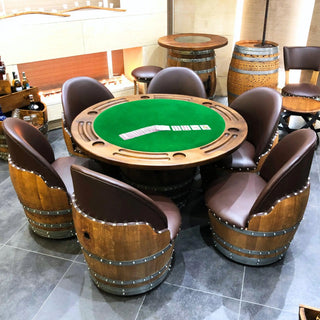
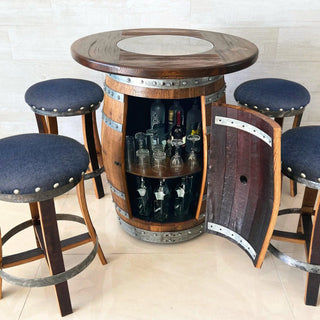
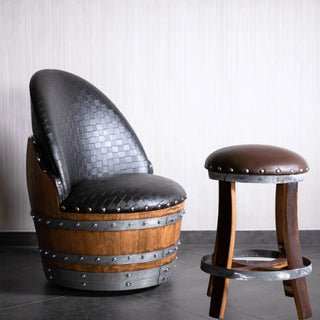
When a barrel made from either type of oak gets repurposed into furniture, those differences don’t disappear.
They carry through.
You might not notice it immediately—but you feel it
French oak pieces can feel slightly smoother, a bit more subtle in their appearance.
American oak pieces tend to feel a little more bold, a little more textured.
Neither is better.
They’re just different.
And depending on your space, one might fit better than the other.
Why Most People Don’t Think About This (And That’s Okay)
Here’s the truth.
Most people don’t walk into a room and think:
“Ah, yes… this is clearly American oak.”
That’s not how it works.
It’s more of a subconscious thing
You notice the feel of the piece.
The way it fits into the space.
The way it catches light.
The texture.
But you don’t always trace that back to the type of oak.
And honestly, you don’t have to.
But understanding it can help you make better choices—especially if you’re trying to match a certain look or feel.
Which One Works Better in a Home? (It Depends on the Space)
This is where it gets practical.
Because the “better” option really comes down to what you want your space to feel like.
If you want something more refined:
French oak tends to lean that way.
It blends more easily into modern or cleaner interiors.
It doesn’t demand attention—it earns it slowly.
If you want something with more presence:
American oak usually delivers that.
It stands out a bit more.
It adds texture and variation that can make a space feel more dynamic.
Neither is right or wrong.
It just depends on the direction you’re going.
How Lighting Changes Everything (Seriously)
This is one of those details people don’t think about until they see it.
Lighting affects how both types of oak show up.
Warm lighting vs. bright lighting
Under warm lighting, American oak tends to pop more—the grain becomes more noticeable.
French oak stays a little more even, a little more controlled.
Under brighter lighting, both become more defined—but the difference in grain still shows.
So depending on your space, the same piece can feel slightly different.
Why Barrel Furniture Doesn’t Fit Perfectly Into One Category Anyway
Here’s something important.
Once a barrel becomes furniture, it’s not just “French oak” or “American oak” anymore.
It’s been aged, used, shaped, and transformed.
So you’re getting a mix of influences
The original material matters—but so does everything that happens after.
That’s why barrel furniture doesn’t feel like standard wood furniture.
It has more layers to it.
Where Oak Wood Wine Barrels Fits Into This
Oak Wood Wine Barrels works with real barrel material—so these differences aren’t theoretical.
They show up in the pieces.
But the focus isn’t on labeling—it’s on the final result
How the piece looks.
How it feels in a space.
How it holds up over time.
Because at the end of the day, that’s what matters most.
The Wine Connection Makes It More Interesting (Even If You’re Not a Wine Expert)
Even if you’re not deep into wine, there’s something cool about knowing where the material came from.
It adds another layer to the piece
It’s not just wood.
It’s something that was part of a completely different process before it got to you.
And whether you ever talk about that or not… it’s still there.
You Don’t Have to Choose—You Just Have to Notice
This is probably the best way to think about it.
You don’t need to stress over whether something is French oak or American oak.
You just need to pay attention to how it feels in your space
Does it fit?
Does it add something?
Does it feel like it belongs there?
If yes, that’s the right choice.
Our Links
- Explore wine barrel furniture collections made from real oak barrels — https://www.obarrel.com
- Shop handcrafted barrel tables, chairs, and décor — https://www.obarrel.com
- Browse rustic oak furniture with natural character and variation — https://www.obarrel.com
Other Resources to Check Out!
- Wine Folly (French vs. American Oak Explained) — https://winefolly.com
- Wine Enthusiast (Oak Influence in Wine Aging) — https://www.winemag.com
- VinePair (Understanding Oak & Barrel Differences) — https://vinepair.com
This blog post is for informational purposes only. While we aim to provide accurate and helpful insight into oak types, wine influence, and material characteristics, individual products and materials may vary. Due to the natural and reclaimed nature of wine barrels, each piece may differ in grain, tone, and structure. Availability and sourcing conditions may also change over time. Always review product details directly and consider your specific space and preferences before making a purchase decision.