
Short answer: The best Glencairn display stands the glasses up on a visible flat surface, near the bottles they are poured from. The Multi-Use Bar Set (from $1,476) at Oak Wood Wine Barrels can be ordered with a flat shelf instead of a stemware shelf, which is suited to the Glencairn's short, solid base. The Half-Barrel Coffee Table ($783) can show a bottle and its glasses under a glass-center top.
Prices as of October 6, 2026; each link shows live stock.
How do you display Glencairn glasses?
Standing up, in a line, by the bottles. A Glencairn is a tulip-shaped nosing glass with a short, solid base. The shape is the point of the glass, so the display should show it off. Design the display around three requirements:
- A flat surface. Glencairns are made to stand. There's no long stem to hang them by.
- Protection from dust. Glass behind a door, under a glass top or rinsed before each tasting.
- Light. Warm light behind or over amber whiskey makes the glass and the pour glow.
Here are nine ways to do it, from a $136 gift pack to a full barrel bar.
9 Glencairn display ideas for a home bar
1. A flat shelf inside a barrel bar
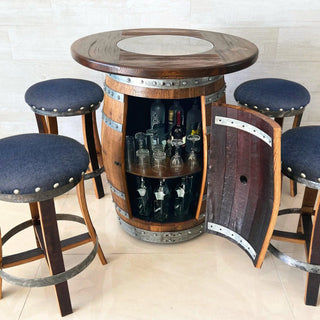
The Bar Set without a top includes a flat shelf and two stools, starting at $1,615.50. If you order the Multi-Use Bar Set, choose the flat shelf option. Then the glasses stand inside the barrel with the bottles alongside, and the 35.4-inch round top is above for pouring. The Barrel Bars collection has all bar options.
2. Under glass, in the middle of the room
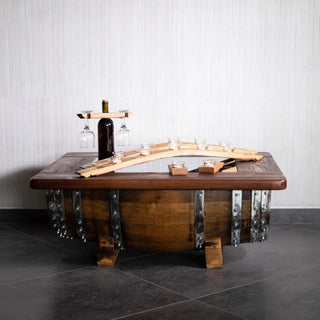
The Half-Barrel Coffee Table has a removable top, and the display runs the full depth of the barrel under its glass center. Set a bottle and a couple of Glencairns inside, and the coffee table is a display case for guests to look down into. The larger Coffee Table with Glass Top ($1,169.10, 41.3 x 33.5 inches) has a removable top and storage inside.
3. Behind a cabinet door
If you want the cleanest glasses, keep them in a closed cabinet and display the bottles on top. The Bar Cabinet ($1,237.50) includes a door shelf. The Top Shelf Bar Cabinet ($1,259.10) features multi-layer bottle storage, hidden storage inside and wheels, so the whole tasting kit rolls to the table.
4. A flight beside the chair
No bar needed for a tasting. Place three Glencairns and the bottle on a Hoop Side Table ($391.50) next to a reading chair. The top is 17.4 inches from the floor, within arm's reach of a seat.
5. On a lazy Susan for a group
The Perfect Host Gift Pack ($136) features a rotating Wine Barrel lazy Susan, two cigar ashtrays and a 2-glass balance. Instead of passing the bottles hand to hand, put the bottles in the center of the table and spin them past everybody's glasses.
6. On the round top itself
If you stop at one row, a row of Glencairns down the middle of a 35.4-inch round top looks deliberate, not cluttered. Wash them out before the next pour.
7. A lit floating shelf
A floating shelf with a warm-white LED strip underneath (around 2700K) lights the bowls from below. Go with one row of six or eight glasses. A crowded shelf starts to look like storage.
8. Leather loops on a board
The glasses are supported by the bowl in a row of leather loops on a wooden backer. If you have more Glencairns than shelf space, this is a good weekend project. Fit the loops to your own glasses (bowl sizes vary by glass).
9. Shot glasses for the crowd
Glencairns are for nosing. The Party Planner Gift Pack ($166.50) has the crowd's shot glasses when the party just wants a pour. It comes with two 5-glass stave flight shooters and a gravity-glass display, shot glasses included. Your Glencairns are safe on the shelf.
Which display fits your setup?
| Idea | Product | Price | Where the glasses sit |
|---|---|---|---|
| Flat shelf in a bar | Multi-Use Bar Set | from $1,476 | Inside the barrel |
| Under glass | Half-Barrel Coffee Table | $783 | Under the glass center |
| Behind a door | Bar Cabinet | $1,237.50 | Behind the door |
| On wheels | Top Shelf Bar Cabinet | $1,259.10 | Inside the cabinet |
| Beside a chair | Hoop Side Table | $391.50 | On the tabletop |
| Lazy Susan | Perfect Host Gift Pack | $136 | Around the table |
| Lit shelf | Your own shelf + LED strip | n/a | On the wall |
Should Glencairn glasses be stored upside down?
The best way is upright in a closed space: no dust, no trapped smells and no pressure on the rim. If they are on an open shelf, rim-down keeps dust out of the bowl. Rinse before pouring either way.
How many Glencairn glasses do you need?
One per guest for each whiskey you compare side by side, or one per guest if you rinse between pours. With four regular tasters trying three whiskeys, twelve glasses means no one has to wait for the sink. Design your display for that number, not for every glass you have.
See How to Host a Bourbon Tasting on a Wine Barrel Table for a full tasting plan.
Frequently asked questions
Can Glencairns hang in a stemware rack?
Not dependably. Stemware slots are for wine-glass stems. A Glencairn has a short, thick base. Racks like our Stave Trio Rack are designed for wine glasses, so store Glencairns on a flat shelf.
How do you keep Glencairn glasses dust-free on display?
Behind a door or under glass: the Bar Cabinet or Top Shelf Bar Cabinet, or the inside display of a glass-center barrel coffee table.
What lighting makes a whiskey display look best?
Warm light behind the glass or under it. Keep bottles out of direct sunlight, which can warm the whiskey and fade labels.
Do the barrel pieces come with glasses?
No, Glencairns don't come with any piece. The only ones that come with shot glasses are the flight shooters and the gravity-glass display.
What's the difference between a flat shelf and a stemware shelf?
A stemware shelf is intended to hang wine glasses by their stems. A flat shelf is a level surface for glasses that stand, such as Glencairns and rocks glasses. Oak Wood Wine Barrels sells both versions of the Multi-Use Bar Set for the same price: $1,476 without stools.