
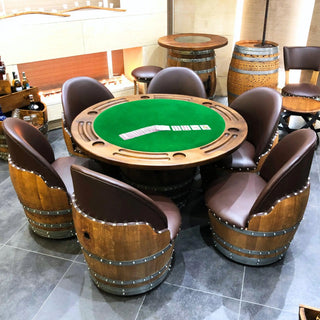
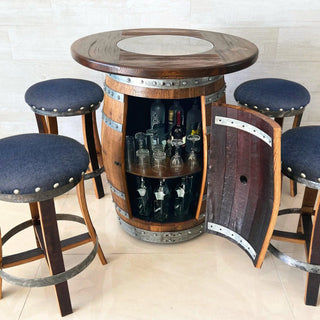
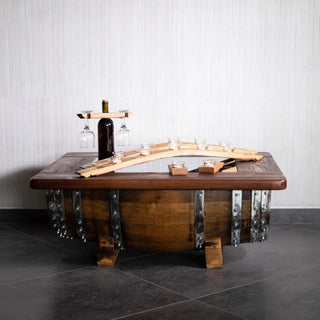
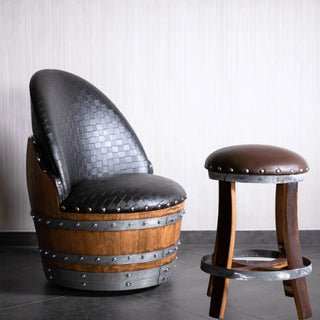
Before you gift furniture, get three numbers: the floor space the piece will sit in, the width of every doorway and hallway it has to pass through, and the ceiling or stair clearance along the way. Nail those and your big gift arrives, fits, and delights instead of becoming an awkward return. This guide walks you through exactly how to measure someone else's space — even without spoiling the surprise.
Furniture is one of the most memorable gifts you can give, but it's also the one most likely to go wrong on fit. If you're eyeing one of our barrel sets for someone, ten minutes of measuring up front is what separates a triumph from a headache. Here's the process.
Why measuring matters more for gifts
When you buy furniture for yourself, you measure as a matter of course — you know your rooms. When you buy it for someone else, you're working blind, and the stakes are higher because a return is awkward and the surprise is on the line. A piece that's beautiful but too big for their space, or too wide for their front door, turns a generous gift into a problem you both have to solve.
The good news: it's not complicated. You need a tape measure, a few minutes, and a plan for getting the numbers without tipping off the recipient. Let's take it step by step.
Step 1: Measure the floor space
Start with where the piece will actually live. You need length and width of the open floor area, plus a sense of what's already there.
- Measure the open footprint. Length by width of the clear floor zone where the piece will sit.
- Account for the piece plus breathing room. A dining or game set needs space not just for the table but for chairs to pull out — add roughly two to three feet of clearance on every usable side.
- Note what it replaces or joins. Is it going into an empty corner, or beside existing furniture? Make sure the new piece won't crowd what's already there.
Write the numbers down. Don't trust your memory across a shopping session.
Step 2: Measure the path in
This is the step people skip, and it's the one that causes the real disasters. A piece that fits the room perfectly is useless if it can't get *to* the room. Trace the entire route from the front door to the final spot and measure every pinch point.
- Every doorway width. Front door, interior doors, the works. Measure the actual clear opening, not the frame.
- Hallway width and turns. A long piece has to pivot around corners. Tight L-shaped hallways are a classic trap.
- Stairwells and landings. Width, and the diagonal clearance on turns. Upstairs delivery is where big pieces most often get stuck.
- Ceiling height on stairs. Low clearance over a staircase can stop a tall piece cold.
- Elevators, if any. For apartments, the elevator's interior dimensions and door opening.
The rule: the narrowest point on the path determines what can come in, no matter how much room the destination has.
Step 3: Check the product dimensions against your numbers
Now put your two sets of numbers side by side with the piece's listed dimensions. Every product on our site lists its measurements, so this is straightforward — compare, don't estimate. Here's the simple check:
| Measurement you took | Compare against | Pass condition |
|---|---|---|
| Floor footprint + clearance | Piece's overall length × width | Room number is larger, with room to move around it |
| Narrowest doorway | Piece's smallest dimension when turned | Doorway is wider than the piece's tightest profile |
| Stair / hallway clearance | Piece's largest dimension | Path clearance exceeds it at every point |
| Ceiling height (if upstairs) | Piece's height when tilted to move | Clearance is sufficient through the turns |
If every row passes, you're clear. If one row is tight, look at whether the piece comes apart, or choose a smaller option. When in doubt, our team is a phone call away at 832-933-8787 to talk through a specific piece's dimensions before you commit.
How to measure without spoiling the surprise
The tricky part of a surprise gift is getting the numbers without the recipient asking why you're crawling around their hallway with a tape measure. A few discreet approaches:
- Measure during a normal visit. Slip into the room "to grab something" and get quick numbers on your phone's notes. Doorways and the target corner take under a minute.
- Enlist a co-conspirator. A spouse, roommate, or adult child who lives there can measure for you without raising suspicion.
- Use reference objects. If you can't get a tape on it, photograph the space next to something of known size — a standard interior door is about 30–32 inches wide, a kitchen counter about 36 inches tall. You can estimate from there.
- Ask a leading question. "Did that old cabinet ever fit through your front door okay?" tells you more than you'd think.
You rarely need perfect precision — you need to know you're not close to a limit. If the numbers have comfortable margin, you're fine.
When the piece is large: let logistics help
For big sets, the measuring matters most, but the delivery is designed to reduce the risk. Large sets ship palletized freight with a scheduled delivery appointment, so the recipient (or you) picks a time and knows exactly when the pallet arrives — no surprise drop-off. Freight delivers to the curb or entry, so your path measurements are what get the piece the rest of the way inside. Smaller items go UPS Ground and rarely pose a fit problem at all.
Shipping is free and insured in the continental U.S. with tracking emailed, so once you've confirmed the fit, the rest is handled.
A quick pre-purchase checklist
Before you click buy on any furniture gift, run this:
- [ ] Floor footprint measured, with clearance to move around the piece
- [ ] Every doorway on the path measured (clear opening, not frame)
- [ ] Hallway turns and widths checked
- [ ] Stairs, landings, and overhead clearance checked if not ground floor
- [ ] Product dimensions compared against all of the above
- [ ] Recipient's taste and room style considered
- [ ] Delivery type (freight vs. UPS) noted so you know what arrives at the curb
Tick every box and you've eliminated the one thing that turns a furniture gift from a triumph into a return.
What to do if the numbers are tight
Sometimes you measure and find a pinch point — a narrow front door, a tight stair turn. Don't give up on the gift; work the problem. A few options when clearance is close:
- Choose a piece that arrives in parts. Sets that separate into a table and individual chairs pass through tight spots far more easily than a single bulky item, because each component clears on its own.
- Look at the smallest usable profile. Many pieces fit through a doorway when turned on their side or angled. Compare the piece's *smallest* dimension against your narrowest opening, not its overall footprint.
- Consider a different room. If the upstairs den is a delivery nightmare, a ground-floor spot with an easy path might be the better home for the piece anyway.
- Call before you buy. When it's genuinely close, reach our team at 832-933-8787 or mass@obarrel.com and talk through the specific piece. It's far better to confirm than to guess.
A tight measurement isn't a dead end — it's just information that points you to the right piece or the right room.
Measure once, delight for years
A furniture gift is the kind of thing someone keeps for decades — which is exactly why the ten minutes of measuring is worth it. Browse the full collection with your numbers in hand, and you'll shop with confidence instead of crossed fingers. Get the fit right, and all that's left is the moment they see it, realize what you gave them, and understand you thought it all the way through.
About Oak Wood Wine Barrels — A family workshop handcrafting authentic Bordeaux-oak Wine Barrel furniture. 4.9-star rated, 4,000+ orders shipped. Shop our collection at obarrel.com.