
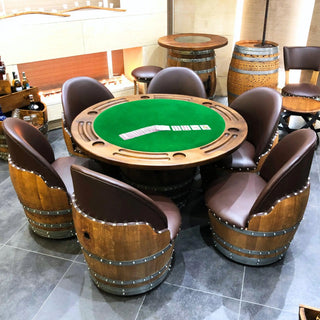
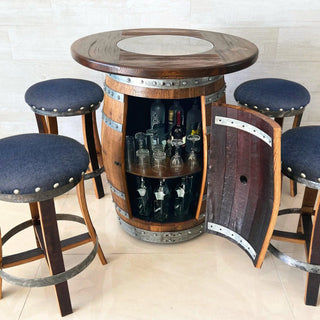
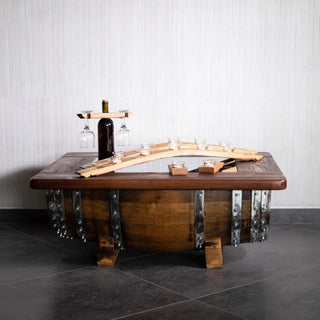
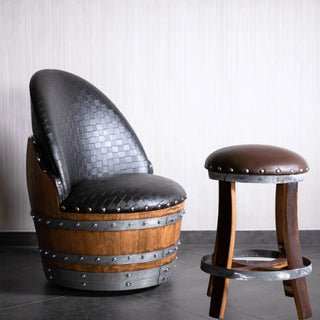
Short answer: The spec is relative humidity, and the goal is a steady middle. Most wood-care advice puts the comfortable range for solid wood furniture at roughly 35 to 55 percent. Big, lasting swings are what do the damage. Very dry air makes staves shrink and can loosen hoops. Very damp air makes them swell and invites mildew. Furniture from Oak Wood Wine Barrels, like the Bar Cabinet ($1,237.50), is finished with spar varnish, which slows moisture exchange but doesn't stop it. That makes a hygrometer in the room the best tool you can own.
Prices as of October 6, 2026; each link shows live stock.
Why is humidity the one spec that matters indoors?
Because oak is always exchanging moisture with the air around it, and humidity is the one condition you control that changes the most from season to season. Direct sun and heat are important too, but these are easily avoided by placement. Unless you control it, humidity will change on its own.
Relative humidity is the amount of water vapor in the air compared to the maximum amount the air can hold at that temperature. Wood gains or loses moisture until it is in balance with the air, a point woodworkers call the equilibrium moisture content. That means every lasting change in the room slowly becomes a change in the wood.
What is the "humidity math" behind it?
Four rules account for almost everything you will see in a barrel piece:
- Warm air holds more water. Heating the same air decreases its relative humidity. That's why heated rooms get dry in the winter even if nothing else changed. Cooling increases the relative humidity, and as the air is cooled, air conditioning removes water from it.
- Wood moves across the grain, not along it. A stave changes very little in length. It changes in width and thickness, so the joints between the staves open slightly in dry weather and close in damp weather.
- Oak responds slowly. A hot shower or a crowded party is a quick spike that does little. Wood moves with a season of dry heat or damp air, so you measure in weeks, not minutes. Thick oak, such as the 1-inch solid oak used for the Barrel Ottoman ($585), takes even longer to react.
- A finish slows the exchange; it doesn't stop it. The spar varnish finish on Oak Wood Wine Barrels pieces is formulated to remain flexible as the wood moves. That buys time. It doesn't mean the humidity in the room doesn't matter.
What happens when the air is too dry?
The staves get narrower. You might see:
- small openings at the stave joints that hadn't been there in summer;
- a hoop that feels looser than it once did;
- a cabinet door or removable top that suddenly seems looser;
- fine surface cracks parallel to the grain, in long, very dry stretches.
The fit generally comes back over a few weeks with increased humidity. Surface cracks never fully close, so it is better to keep the room steady than to fix it afterward.
What happens when it's too damp?
The wood swells up. Doors and removable tops fit more tightly, and in corners where air does not circulate, mildew can begin on the surface. The usual trouble spot is the basement: a cool slab and still air make damp conditions likely where a bar often sits. Allow air to circulate around the piece and do not jam it against a cold outside wall.
How do you measure it?
Buy a cheap digital hygrometer and place it in the same room as the barrel piece, away from vents, outside doors and sunny windows. Read it weekly, and more often when the seasons change and the heat or air conditioning is turned on. A month of readings tells you more than any chart, because it shows you your house, not some average house.
How do you keep it steady?
- Dry season: a whole-house humidifier added to the heating system, or a room humidifier near the piece. If you use an ultrasonic unit, fill it with distilled water so it won't leave white mineral dust on the furniture.
- Damp season: air conditioning does most of the work. A basement might still need a dehumidifier.
- Placement: keep barrel furniture away from heating and cooling vents, fireplaces, radiators and direct sunlight through windows.
- Never add water to the wood. Working barrels are soaked to swell and seal the staves. Furniture is finished and must not be soaked. Fix the room, not the barrel.
Where in the house does a barrel piece do best?
| Room | What to watch | What to do |
|---|---|---|
| Living or dining room | Vents and sunny windows | Place it out of the airflow and out of direct sun |
| Basement bar | Damp air, cool floor, still corners | Run a dehumidifier in damp months; leave space behind the piece |
| Kitchen | Steam and heat near the stove | Keep the piece a few feet away from the cooktop |
| Home office or den | Space heaters | Point heaters away from the wood |
| Unheated garage or shed | Large, fast swings | Not a place for barrel furniture |
The only catalog item finished for outdoor protection is the Half-Barrel Planter ($316.50), with marine varnish. Everything else is furniture for indoors.
What does this mean for the piece you own or plan to buy?
The first things to move with the seasons are those with moving parts: cabinet doors, removable tops and lids. The Hoop Side Table ($391.50), with its oak top on metal hoops, and the cabinets in Barrel Bars do best in a room that stays in the middle range all year.
Oak Wood Wine Barrels is a family business located in Houston, Texas, where the air is humid much of the year. What side of the range you fight is determined by your climate. Humid climates push wood toward swelling; long, heated winters push it toward dryness. Watch your own hygrometer and control whichever side your house leans toward.
See A 12-Month Care Calendar for Indoor Wine Barrel Furniture for maintenance instructions for each month. For an already slipped hoop, see How to Fix a Loose Hoop, Squeaky Stave, or Scratched Barrel Top.
Frequently asked questions
What humidity is best for Wine Barrel furniture?
A steady middle ground: roughly 35 to 55 percent relative humidity, the range most wood-care advice gives for solid wood furniture. It's just as much about consistency as the number.
Why do barrel hoops get loose?
Usually dry air. The staves get narrower, so there is less for the hoop to grab. Raise the humidity and let it sit for a few weeks before trying to fix it.
Can I pour water into a barrel piece to tighten it?
No. Working barrels are soaked so that the staves swell and seal. Finished furniture shouldn't be. Instead, adjust the humidity in the room.
Is a basement a good place for barrel furniture?
Yes, as long as it's dry. In damp months, run a dehumidifier and allow the air to circulate around the piece.
Do I need a humidifier for barrel furniture?
Only if your hygrometer shows the room is running dry for weeks on end, which is common in heated homes in winter.