
Short answer: No one can credibly quote a payback period without your numbers. There is no reliable published figure on the lift a statement bar gives a venue's sales. You can calculate the break-even point, which is the cost of the bar divided by the profit on one more drink. At Oak Wood Wine Barrels, the Bistro Pub Set with four stools is $2,754, so if an extra drink earns you $8 after its own cost (a sample figure; use yours), it pays for itself after 345 extra drinks.
Prices as of October 6, 2026; each link shows live stock.
Is there a reliable ROI figure for a statement bar?
No. A bar is one of dozens of things that drive a venue's sales: the menu, the service, the location, the marketing, the season. There are studies of atmosphere and of spending, but none that isolates what one piece of furniture earns in your room. Treat any exact "payback in X months" or "Y percent more spend" claim as a guess unless it was based on your own sales.
A statement bar can do tangible, countable things: it adds seats, it gives waiting guests a place to order, and it gives people something worth photographing. Those things produce the return, so measure those things.
How do you calculate break-even?
Use one formula:
Extra drinks to break even = cost of the bar ÷ profit on one extra drink
"Profit on one extra drink" is the price minus the cost of the contents of the glass, and only for drinks you would not have sold otherwise. Only you know that figure, so the table below runs three sample values. They are examples for the math, not industry norms.
| Investment | Price | Extra drinks at $5 profit | At $8 profit | At $12 profit |
|---|---|---|---|---|
| Bistro Pub Set, 4 stools | $2,754 | 551 | 345 | 230 |
| Luxury Captain Chair Corner Set, 2 chairs | $3,089.70 | 618 | 387 | 258 |
| Double Bar Set, 8 stools | $5,508 | 1,102 | 689 | 459 |
Then convert it to time. If the new seats produce 15 extra drinks a week you would not have sold, 345 extra drinks takes 23 weeks. If they produce 30, it takes about 12. That's the weekly number to estimate carefully, and to check once the bar is in.
What can a barrel bar add that you can count?
Seats
This is the most immediate effect. A bistro set offers bar-height seating where none may have existed. The Bistro Pub Set seats two or four around a 35.4-inch round top, on a finished Bordeaux-type Wine Barrel 37.2 inches tall with a steel foot rail. The Double Bar Set (from $2,808 without stools) is two finished barrels, two round tops and two foot rails; four or eight stools are optional.
Count it as: extra seats × the number of times each seat turns over on a busy night × the average spend per seat.
A place to wait
Guests waiting for a table will often order a drink if there is a place to stand and put it down. They get that spot from a bar-height barrel by the host stand. Compare drink orders during the wait before and after to monitor this.
A lounge corner
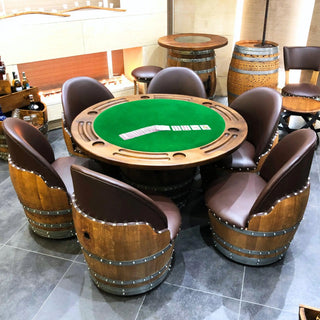
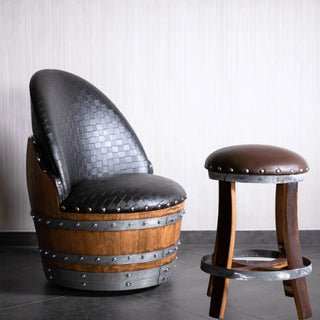
A pair of upholstered barrel chairs can make an unused corner into a place to sit for lingering guests. The Luxury Captain Chair Corner Set (from $3,089.70) is two tufted, memory-foam captain chairs and a hoop table. The chairs have removable seat storage and wheels.
Something worth photographing
Furniture from Oak Wood Wine Barrels appeared in the Netflix series Mo. Guest-posted photos are authentic but hard to put a price on. If you want a number, ask new guests how they heard about you, and track how often the bar shows up in tagged photos.
What costs come on top of the price?
- Delivery: free in the continental U.S. Larger orders such as sets are delivered by appointment so you can plan around service.
- Floor space: every seat you put in takes away space from something else. Before you order, make sure you measure the space around the foot rail and stools.
- Upkeep: a wipe-down after service. The pieces are finished with spar varnish; tops that see heavy use will have to be refreshed eventually.
- Insurance and moving: if the pieces will be moving between rooms or events, plan for that. See Moving, Storing, and Insuring Barrel Furniture for Event Use.
How do you measure the result after the bar is in?
Choose a few numbers before the day of delivery and track them for the same weeks before and after:
- Drinks sold at the seats the bar added.
- Average check for parties seated there.
- Drink orders taken from guests waiting for a table.
- How new guests say they found you.
Compare like with like, such as the same month or the same days of the week. Also note any other changes, like a new menu or a price increase. That's the real ROI: your own before-and-after, not someone else's percentage.
Which pieces suit a restaurant or lounge?
| Piece | Price | Seats included | What it is |
|---|---|---|---|
| Bistro Pub Set, 4 stools | $2,754 | 4 stools | Finished barrel, 35.4 in round top, foot rail |
| Double Bar Set | from $2,808 | 0, 4 or 8 stools | Two finished barrels, two round tops, two foot rails |
| Luxury Captain Chair Corner Set | from $3,089.70 | 2 or 4 captain chairs | Chairs plus a hoop table |
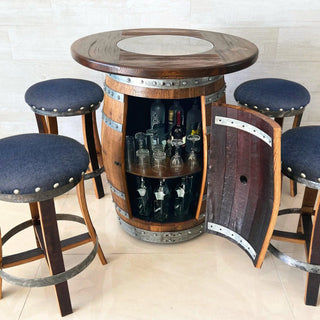
| Double Liquor Cabinet | from $4,248 | 4 or 8 stools | Two barrel bar cabinets with round tops: seating at the tops, with wine, stemware and spirits stored inside |
Most of the pieces are in stock, and in-stock orders ship within five business days, which is important if you are working to an opening date. If you're furnishing a venue, call Oak Wood Wine Barrels at (832) 933-8787 to discuss quantities and delivery before ordering. See all sets in Full Barrel Sets, and for layout ideas, Wine Barrel Furniture for Restaurants, Bars & Tasting Rooms.
Frequently asked questions
What is the ROI of a statement bar in a restaurant?
It depends on your margins and the number of additional drinks or covers the bar produces. No published figure isolates the effect of a bar, so calculate break-even: cost ÷ profit per extra drink.
How many extra drinks does it take to pay for a barrel bar?
For a $2,754 Bistro Pub Set with four stools: 551 at $5 profit per drink, 345 at $8, and 230 at $12. Use your own margin.
Does a statement bar increase restaurant sales?
It can add seats and a place for waiting guests to order, but you will only know by measuring the same weeks before and after.
How quickly can a venue get barrel furniture?
Most items are in stock and will ship within five business days of an in-stock order. Larger orders are delivered by appointment.
Where has Oak Wood Wine Barrels furniture appeared?
It appeared in the Netflix series Mo.