
The Shop Small season is the year's best moment to choose handcrafted over mass-produced — and the reasons go well beyond feeling good about the purchase. Handmade furniture is simply built differently: better materials, real construction, and a maker who stands behind the piece. When you browse a workshop's full collection instead of a warehouse catalog, you're choosing furniture that lasts decades over furniture designed to be replaced. Here's what that choice actually gets you.
The material difference is the whole difference
Most mass-produced furniture is engineered to a price, which means the material is the first thing sacrificed. Particleboard cores, thin veneers, and hollow construction let a factory hit a low sticker — and they're also why that furniture sags, chips, and swells within a few years. The savings up front become a replacement cost down the line.
Handcrafted furniture inverts that math. A piece built from solid wood — genuine, thick, honestly finished — costs more to make because the material is real. But it holds its shape, its finish, and its character for decades. You pay once for something that lasts, instead of repeatedly for things that don't. Over the life of the piece, the handcrafted version is often the cheaper choice.
Handmade means a person is accountable
When furniture comes off an anonymous assembly line, no one in particular answers for it. When it's handcrafted in a family workshop, the people who built it are the people who stand behind it. That accountability shows up in the details a factory rushes past — the joinery, the finish, the way an edge is smoothed — because the maker's name is attached to the result.
It also shows up when something goes wrong. A small maker with a real phone number and email is a business you can actually reach, not a support portal that routes you nowhere. That's part of what you're buying when you shop small: a relationship, not just a transaction.
Handcrafted vs. mass-produced, side by side
The trade-offs are clearest laid out plainly:
| Mass-produced furniture | Handcrafted furniture |
|---|---|
| Built to a price, replaced in a few years | Built to last, kept for decades |
| Particleboard and veneer | Solid, named materials throughout |
| Identical units, no character | Each piece unique, with real character |
| Anonymous factory | A named maker who stands behind it |
| Support portal, if any | A real person, phone and email |
| Cheaper today, costlier over time | Fair price once, value that holds |
Neither is "better" for every situation — but for a piece you'll live with daily and want to keep, the right column wins on nearly every line that matters.
Character you can't manufacture
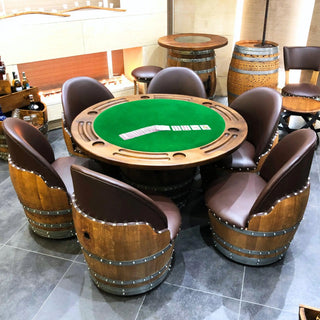
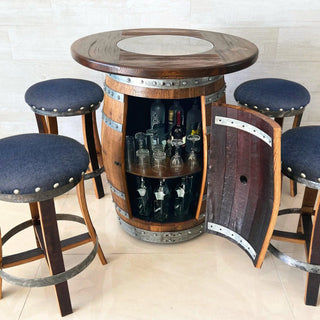
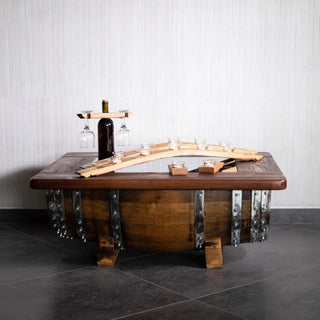
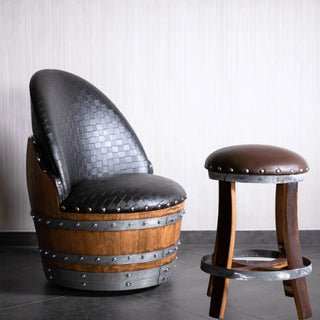
There's a quality in handmade furniture that mass production can't replicate: genuine character. Furniture built from retired oak Wine Barrels is a vivid example. Each piece carries authentic wine staining soaked in over years, hand-wirebrushed grain you can feel, and the small marks of the barrel's working life. Because every barrel aged differently, no two pieces are alike.
A factory can print a wood-grain pattern, but it can't give you a piece with a history. When you run your hand over a genuine barrel top, you're touching wood that spent years shaping wine — that's not a finish, it's a story. Browse a workshop's barrel bars and cabinets and the difference is immediate: these are pieces with presence, not products stamped from a mold.
Where your money goes matters
Shop Small season puts a spotlight on something worth thinking about year-round: who receives your money. Buy from a warehouse giant and most of your dollars fund logistics, marketing, and shareholder margin. Buy from a family workshop and they go to the people who built the piece and the craft that made it possible.
That's not charity — it's a better trade. You get furniture made with more care by people who depend on doing it well, and your spending keeps a real craft and a real family business alive. The dollar spent handcrafted does more, both for you and for the maker, than the same dollar spent on a flat-pack.
Handcrafted isn't only for the big purchase
A common misconception is that buying handmade means committing to a major piece. It doesn't. Handcrafted quality scales all the way down — a small barrel accessory delivers the same solid-oak material, the same authentic character, and the same maker's care as a full set, just at an entry price. It's the ideal way to bring a genuine handcrafted piece into your home, or to gift one, without a large outlay.
That accessibility matters this season especially. Whether you're furnishing a room or looking for a meaningful gift, there's a handcrafted option at nearly every budget — and each one carries the qualities a mass-produced equivalent can't.
The practical case is as strong as the sentimental one
It's easy to frame handcrafted as the "feel-good" choice, but the practical argument stands on its own. Consider what a good small maker offers: solid materials that outlast the mass-produced version, free insured shipping nationwide, orders that ship within about five business days, large pieces delivered by scheduled freight appointment, flexible payment plans, and a track record you can verify in the ratings and order count. That's not a compromise you make for warm feelings — it's a genuinely better product and a genuinely better buying experience.
The feel-good part is real too. But you don't have to choose between doing right and buying well this season. Handcrafted lets you do both.
The lifetime-cost math nobody runs
Most furniture decisions get made on the sticker price alone, which is exactly how mass-produced pieces win the moment and lose the decade. Run the real math instead. A cheaper piece replaced every few years — as the top warps, the veneer chips, the joints loosen — quietly costs you the purchase price several times over, plus the hassle of shopping, hauling, and disposing of each failed version. A handcrafted piece bought once, at a fair price, simply stays.
Solid oak furniture, finished to last, doesn't just avoid the replacement cycle — it often improves with age, developing character rather than wear. That's the opposite of depreciation. When you divide the cost of a genuine handcrafted piece across the decades you'll actually own it, the per-year figure is frequently lower than the disposable alternative you'd replace again and again. Buying handcrafted isn't the extravagant choice dressed up as the virtuous one; on the numbers, it's often the frugal one. Shop Small season is a fine time to make that math work in your favor.
A gift that carries the story
Handcrafted furniture also makes a better gift than almost anything mass-produced, precisely because it comes with a story you can tell. Handing someone a piece built by a family workshop from genuine retired oak Wine Barrels means handing them the whole arc — the barrel that once aged wine, the makers who gave it a second life, the years it will now spend in their home. A warehouse product carries none of that. This season, that story is part of the gift, and it's one the recipient remembers long after the wrapping is gone.
The bottom line
Buying handcrafted this Shop Small season isn't a sacrifice — it's the smarter purchase. You get solid materials over particleboard, real character over printed grain, a maker who stands behind the piece over an anonymous factory, and furniture that lasts decades over furniture built to be replaced. Whether you're spending a little on an accessory or investing in a statement piece, choose the handmade version and your money buys more, lasts longer, and reaches the people who actually made it.
About Oak Wood Wine Barrels — A family workshop handcrafting authentic Bordeaux-oak Wine Barrel furniture in America. 4.9-star rated, 4,000+ orders shipped. Shop our collection at obarrel.com.