
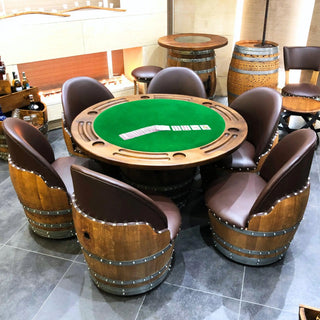
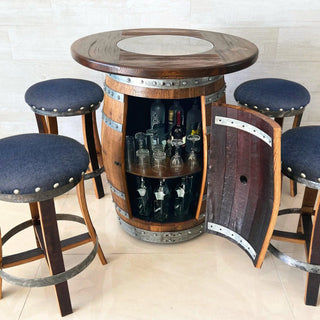
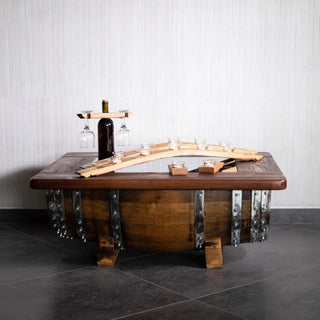
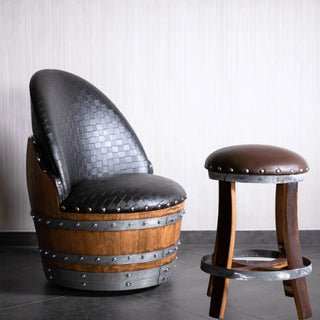
Wine country home decor is built on three principles: warm reclaimed wood as the visual anchor, restrained earth-and-linen palette, and lighting that mimics late-afternoon golden hour. Get those three right and the rest of the room follows. The mistake most people make is treating "wine country" as a theme — adding grape stencils, faux vines, and corkscrew art until the room reads as souvenir shop. Tasting rooms in Napa, Sonoma, Burgundy, and Tuscany do almost the opposite. They strip back, let one or two natural materials carry the weight, and pour the wine into the space — not into the wallpaper. We have built furniture for hundreds of these rooms in our family workshop, and the ten design moves below are the ones that work consistently. The full piece you can build a room around lives in our products collection; what follows is how to assemble the room itself.
This is a TOFU piece — read it for inspiration, not a checklist. Pick three or four moves that match how you actually live in the room. Architectural Digest's editorial coverage of working tasting rooms in Napa, Sonoma, and the Loire has repeatedly emphasized the same restraint principle: one or two natural materials, allowed to carry the room [Source: Architectural Digest, "Inside the World's Most Beautiful Wineries" coverage archive, architecturaldigest.com].
1. Reclaimed-Oak Anchor Piece
Every tasting room has one. A bar built from an old vat. A communal table milled from a downed estate tree. A wine barrel cut down for serving. The principle: one piece of authentically aged wood does more work for the room than ten decorative accents. In a home setting, that anchor is most often a wine barrel bar, a barrel side table, a stave wall installation, or a barrel-base dining table. Our reclaimed Bordeaux-oak pieces are sourced from working wineries — the staining you see is real wine soak, not pigment. That authenticity is what separates wine country from wine theme.
Where to put it: the room's natural focal point. Across from the entry. Under the room's best window. Where guests instinctively gather.
2. Neutral Linen and Natural Fabric
Tasting rooms use linen, raw cotton, jute, hemp — never synthetics, never high-sheen. The palette is warm white, oatmeal, sand, soft clay. Cushions, curtains, table runners, napkins. The function is acoustic (linen softens the hard surfaces of stone, wood, and glass) and visual (neutral fabric makes the wood and the wine the heroes). Replace one set of curtains and one set of throw pillows in linen and the room shifts immediately. Elle Decor's coverage of farmhouse and wine-region interiors consistently returns to natural fibers and undyed palettes as the foundation of an authentic look [Source: Elle Decor, "European Country Style" feature archive, elledecor.com].
Avoid: velvet, glossy synthetics, anything in a pattern busier than a simple weave.
3. Woven Baskets and Natural Storage
Open baskets — willow, seagrass, oak splint — hold corks, cloth napkins, throws, wine totes, kindling. They give the room storage without visual clutter and continue the natural-material story. Two or three baskets, two or three sizes, all roughly the same tone. A wall-hung basket cluster above the bar is a classic tasting-room move that translates well to a home.
Source: estate sales, vintage shops, and any wine country gift shop. The right basket is a $20 item, not a $200 one.
4. Vintage Maps of Wine Regions
A framed antique map of the Médoc, Burgundy's Côte d'Or, the Willamette Valley, or Napa — sized to anchor a wall — does the work of three decorative items at once. It is regionally specific (which the wine you serve can match), educational, and historically textured. Hang at eye level for someone seated, not standing. A single 24"x36" map is better than three small ones.
Sources: Etsy is the obvious one; auction houses and rare-map dealers for the real thing. Reproductions printed on linen-textured paper read more authentic than glossy stock.
5. Brass Accents in Small Doses
Brass — unlacquered, allowed to develop patina — is the metal of wine country interiors. Door pulls, light fixture finishes, candle holders, picture frames, a single brass tray on the bar. Restraint matters. Three brass touches in a room is wine country. Ten is a Restoration Hardware catalog. Pair brass with the warmth of reclaimed oak; avoid mixing brass with cool chrome or matte black in the same sightline.
Care: unlacquered brass darkens over years. That patina is the point. Resist the urge to polish back to bright.
6. Stave Wall Art and Reclaimed-Wood Installations
Wine barrel staves — the curved, fire-toasted, sometimes wine-stained planks that make up a barrel's body — are wine country in a single object. As wall art: a chevron pattern across an accent wall, a single stave used as a floating shelf, a cluster of staves framed and hung as triptych. The character (toasting marks, residual color, mineral patina) is unrepeatable. Each stave in our workshop is hand-wire-brushed to bring out the grain without erasing the history.
Scale tip: a single stave is 32–36 inches long. Build wall installations to be roughly 1/3 the wall's width — anything smaller reads accessory; anything larger reads commercial.
7. Real Cork on Display
A glass apothecary jar or a low wide bowl filled with the corks from bottles you have actually opened, dated in marker on the side, accumulating over years. It is the cheapest, most personal, and most authentic wine country decoration possible. Tasting rooms in Bordeaux and Napa both do this — the cork mass becomes a tactile, scented, slowly-changing record of the room's life. Place near the bar or on the coffee table.
Pro move: date each cork the day you open it. Five years in, the jar is a journal.
8. Warm, Layered, Dimmable Lighting
Wine country light is golden, low, layered. Never overhead fluorescent. Never cool white. The rule of thumb: at least three light sources at three different heights in any wine-room scene — table lamp at sitting height, picture light or sconce at standing height, an ambient floor lamp or ceiling pendant on a dimmer. Bulb temperature: 2700K maximum, ideally 2400K. The same warm temperature that flatters wine in a glass also flatters skin, conversation, and wood grain. The Illuminating Engineering Society characterizes 2700K and below as "warm white," the temperature range that matches incandescent and candle-light and reads as restful in residential settings [Source: Illuminating Engineering Society (IES), "Lighting Handbook" residential lighting guidance, ies.org].
Practical: put every fixture in the room on a dimmer. The room you want at 4 PM is not the room you want at 9 PM.
9. A Single Statement Decanter or Glass Object
One blown-glass decanter on the bar, displayed even when not in use, doubles as sculpture. A vintage cut-crystal claret jug, a contemporary hand-blown vessel, a 19th-century French confit jar repurposed as a vase — the principle is one beautiful glass object, prominently placed, that the room is partly designed around. This is the rule that separates a styled room from a decorated one.
Where: the bar, the dining table center, the open shelf above the cabinet. Eye level, room lit.
10. Low-Profile Natural-Fiber Rug
The floor is the often-skipped wine country move. Cool tile, hardwood, or stone gets softened with a flat-weave wool, hemp, or sisal rug in oatmeal or soft terracotta — never patterned, never plush. The rug visually grounds the seating area and absorbs sound, which matters in a room built for conversation and pouring. Size up: the rug should extend at least 18 inches past the front legs of seating on all sides.
Avoid: synthetic blends, high pile, ornate patterns.
Decanter's design coverage of working winery hospitality spaces echoes the same point: warm, layered, dimmable light at multiple heights is the lighting signature that separates a tasting room from a hotel lobby [Source: Decanter, winery design and hospitality coverage, decanter.com].
A Brief Note on What to Avoid
The fastest way to break the aesthetic:
- Grape-themed anything (stencils, decals, cookie jars, signs that say "Wine O'Clock")
- Faux vines or plastic grapes draped on shelves
- Wall art reading "But First, Wine" or any rhyming phrase about Cabernet
- Mass-produced "rustic" signs from craft stores
- Bright LED string lights, neon signs, anything with the word "BAR" in script
- High-gloss varnishes on wood — wine country wood is matte to satin, never piano-finish
Tasting rooms convey wine through restraint. Your home can too.
Building the Room in Stages
If you are starting from a blank room, the order matters:
- Anchor piece first (barrel bar, barrel table, or stave wall). This sets the room's center of gravity.
- Lighting second. Dimmers and warm bulbs make every subsequent decision easier.
- Soft goods third (linen curtains, rug, throw pillows). Builds the neutral envelope.
- One framed map fourth. Decides the regional voice of the room.
- Brass, baskets, glass, cork last. The small layers that make the room feel inhabited.
The whole sequence can play out over a year — and probably should. Tasting rooms read authentic because they accumulated, not because they were decorated in a weekend.
What "Authentic" Actually Means
Most rustic-look furniture sold online is new pine, stained dark, distressed with sandpaper. The mass marketplace is full of it. The difference with reclaimed wine barrel furniture is that the wood is not pretending — it spent five to twenty years inside a working winery, getting filled, racked, topped off, emptied, and re-stained by every vintage cycle. The wear patterns are vintage cycles, not factory sanding. The smell — yes, the smell — is residual oak and wine.
We have customers who tell us that the first time someone sits at a barrel table built from a real Napa wine barrel, the conversation shifts. The piece carries its own story. That is the difference between wine country and wine country cosplay, and it is the reason we built our family workshop around real barrels in the first place. 1,500+ Etsy sales and a 4.9-star Star Seller rating tells us our customers feel the same. Robb Report's coverage of reclaimed-wood and provenance furniture has documented the same phenomenon: pieces with verifiable history outperform reproductions in both buyer satisfaction and long-term value retention [Source: Robb Report, "The Case for Reclaimed Wood Furniture" feature coverage, robbreport.com].
Where to Start
For most customers, the easiest entry into the aesthetic is a single barrel piece — bar, table, or stave rack — in a room that already has good bones. Add lighting, add linen, and the room reads tasting room within an afternoon. From there, build slowly.
For the full lineup of pieces that can serve as the anchor, browse the all products collection. For more on pulling rooms together around wine, our pillar hub on wine stave rack display ideas is the broader P3 wine-lifestyle guide.