
Short answer: Twelve bottles cover the styles that a home bourbon collection is built on: classics like Buffalo Trace and Maker's Mark, single barrels like Blanton's, barrel-proof bottles like Booker's, and the hunted names like Pappy Van Winkle 15. Display the ones you pour where you can reach them. From Oak Wood Wine Barrels, two 5-Bottle Stave Wall Racks ($247.50 each) hold ten. The Party Planner Gift Pack ($166.50) lays out a five-pour tasting flight for two.
Prices as of October 6, 2026; each link shows live stock.
The Distilled Spirits Council put the American whiskey market at $5.1 billion in 2025 (reported by The Whiskey Wash), so there's certainly no shortage of bottles to pick from. We intentionally left the price of bottles off this list. They vary by store, state and year, and the hard-to-find bottles often sell for much more than suggested retail prices.
What makes a bourbon iconic?
Three things: it defines a style, it set a standard to which other bottles are compared, and it's worth tasting next to its neighbors. The 12 below are grouped so each group teaches you something: what the classics taste like, what a single barrel adds, and what barrel proof does.
What is bourbon, legally?
Bourbon is a type of whiskey that must be made in the United States from a grain mash of at least 51 percent corn. It has to be aged in new charred oak containers, distilled at no more than 160 proof, put in the barrel at no more than 125 proof, and bottled at 80 proof or higher. No flavor or color may be added, only water to bring it to bottling proof. "Straight" bourbon is aged for a minimum of two years. Every bottle below hits that mark. The differences come from recipe, yeast, age, proof and barrel selection.
The 12 iconic bourbons
The foundation
- Buffalo Trace. Bottled at 90 proof, the flagship of Buffalo Trace Distillery in Frankfort, Kentucky. Taste it first: Eagle Rare, Blanton's, George T. Stagg and Pappy Van Winkle are all from the same distillery.
- Maker's Mark. The most famous wheated bourbon. Soft red winter wheat takes the place of rye for a softer, sweeter pour. It's from Loretto, Kentucky, bottled at 90 proof and sealed with red wax, dipped by hand.
- Wild Turkey 101. Bottled at 101 proof at the Lawrenceburg, Kentucky, distillery long associated with master distillers Jimmy Russell and his son, Eddie. Bold enough for an Old Fashioned, good enough to sip.
The single barrels
- Four Roses Single Barrel. Four Roses uses two mash bills and five strains of yeast to create ten recipes. At 100 proof, the Single Barrel is an example of how much one barrel and a recipe influence the flavor.
- Eagle Rare 10 Year. Ten years old, 90 proof, from Buffalo Trace. Try it next to a Buffalo Trace to see what more years in oak do.
- Blanton's Original Single Barrel. Introduced in 1984 by Elmer T. Lee as the first bourbon sold as a single barrel. It's 93 proof, and its stoppers feature a horse and jockey in eight positions, with one letter of B-L-A-N-T-O-N-S on each.
- Henry McKenna Single Barrel 10 Year Bottled-in-Bond. It's from Heaven Hill. Bottled-in-Bond means one distillery, one distilling season, at least four years in a bonded warehouse, and exactly 100 proof. This one also has a 10-year age statement.
The small batches and barrel-proof bottles
- Knob Creek. Created by Booker Noe in 1992 as part of Jim Beam's Small Batch Bourbon Collection and bottled at 100 proof.
- Booker's. Named for Booker Noe, bottled uncut and unfiltered at barrel proof. Each batch has its own name, and no two releases are exactly the same.
- Elijah Craig Barrel Proof. Heaven Hill's barrel-proof bourbon, released in several batches annually, bottled without added water. Line up two batches and see how far apart they are.
The ones you hunt for
- George T. Stagg. Part of the Buffalo Trace Antique Collection, released annually in the fall, uncut and unfiltered at barrel proof.
- Pappy Van Winkle's Family Reserve 15 Year. A wheated bourbon from Buffalo Trace, made with the Van Winkle family, at 107 proof. It's famous for being difficult to find at retail.
The 12 at a glance
| Bourbon | Style | Proof | Made by |
|---|---|---|---|
| Buffalo Trace | Classic | 90 | Buffalo Trace |
| Maker's Mark | Wheated | 90 | Maker's Mark |
| Wild Turkey 101 | Classic, high proof | 101 | Wild Turkey |
| Four Roses Single Barrel | Single barrel | 100 | Four Roses |
| Eagle Rare 10 Year | Aged 10 years | 90 | Buffalo Trace |
| Blanton's Original | Single barrel | 93 | Buffalo Trace |
| Henry McKenna 10 Year BiB | Bottled-in-Bond | 100 | Heaven Hill |
| Knob Creek | Small batch | 100 | Jim Beam |
| Booker's | Barrel proof | Varies by batch | Jim Beam |
| Elijah Craig Barrel Proof | Barrel proof | Varies by batch | Heaven Hill |
| George T. Stagg | Barrel proof | Varies by year | Buffalo Trace |
| Pappy Van Winkle 15 | Wheated | 107 | Buffalo Trace with the Van Winkle family |
How should you display a 12-bottle bourbon collection?
Sort by number of pours, then by distillery.
- Daily pours within reach. Buffalo Trace, Maker's Mark and Wild Turkey 101 belong on the bar top or the first rack you come to.
- Group the families. The Buffalo Trace bottles together, the Heaven Hill pair together, the Beam pair together. The shelf then tells the story when asked by guests.
- Keep the hunted bottles behind a door. To keep sealed bottles you are saving at their best, store them upright, out of direct sunlight and at a constant room temperature.
Furniture that fits twelve:
- Two 5-Bottle Stave Wall Racks ($495 for the pair) add ten bottles to the wall, each rack standing 37.2 inches tall. The other two live on the bar.
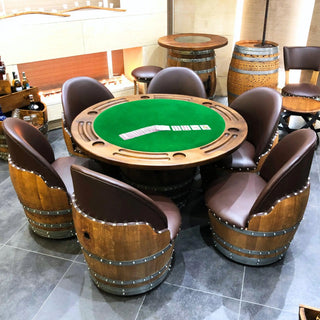
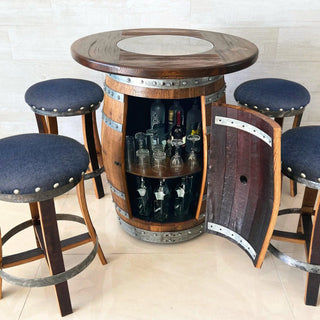
- Home Bar Set #1 (from $2,565): a barrel bar and round top, two stools and two 5-bottle wall holders. Ten bottles up, two on the bar.
- Top Shelf Bar Cabinet ($1,259.10) has multi-layer bottle storage and hidden storage inside, for the bottles you don't open often.
All bottle racks can be found in Wall & Wine Racks. If you want to build a room around your collection, check out our setups for a 50-bottle bourbon collection.
How do you taste twelve bourbons at home?
Not all at once. Taste three to five, side by side, from lowest proof to highest, adding a few drops of water to the barrel-proof pours. Good flights from this list:
- One distillery, three bottles: Buffalo Trace, Eagle Rare 10, Blanton's.
- Wheat vs. rye: Maker's Mark next to Wild Turkey 101.
- Proof ladder: Knob Creek, Booker's, Elijah Craig Barrel Proof.
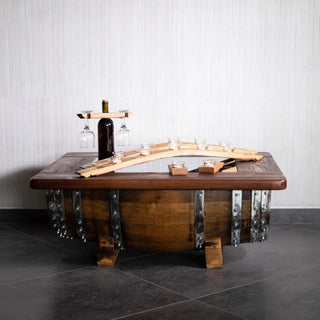
The Party Planner Gift Pack includes two 5-glass stave flight shooters and a gravity-glass display (shot glasses included) for two people to taste the same five pours. The Perfect Duo Gift Pack ($104) consists of a candle centerpiece and a flight shooter. For an explanation of what each label is telling you as you taste, see How to Read a Bourbon Label.
Frequently asked questions
Which bourbon should a new collector buy first?
Begin with three styles: Buffalo Trace (classic), Maker's Mark (wheated) and Wild Turkey 101 (higher proof). Tasted side by side, they teach you more than one rare bottle would.
What does Bottled-in-Bond mean?
The bourbon was made at one distillery, in one distilling season, aged at least four years in a federally bonded warehouse and bottled at 100 proof.
What does barrel proof mean?
The bourbon is bottled at the strength it came out of the barrel, with no added water. The proof will be different for different batches.
Why are some bourbons so hard to find?
Some are released once a year or in small batches, so stores only get a few bottles. Patience works better than paying any price.
Can a bourbon barrel be used twice for bourbon?
No. Bourbon has to be aged in new charred oak, so used barrels go on to other spirits or other uses. At Oak Wood Wine Barrels, the furniture is made from retired Bordeaux-type Wine Barrels.