
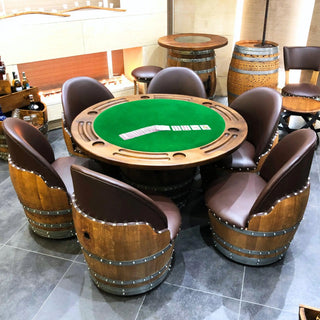
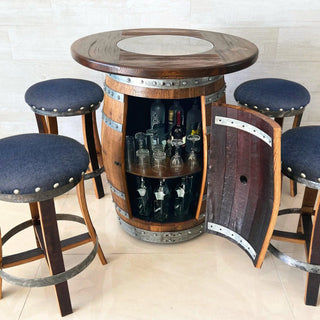
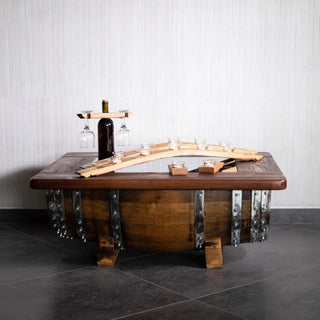
Short answer: Keep opened bottles upright, sealed and cool, and put a date tag on each one; that does more than any gadget will do. Place the opened bottles and a stopper kit at the front of a barrel cabinet, where they can be seen, and the unopened wine behind or below. At Oak Wood Wine Barrels, the Bar Cabinet ($1,237.50) and the Multi-Use Bar ($1,237.50), which is designed to hang stemware, store spirits and lay aging wine, are made for this job.
Prices as of October 6, 2026; each link shows live stock.
How long does an open bottle of wine last?
Most still wines taste good for a few days after you recork them; a day or two for sparkling wine. All of the methods below extend that window. But they don't stop the clock.
The problem is oxygen. As soon as the cork is out, air begins to flatten the fruit and aroma. Warmth speeds that up, and cold slows it down. Fortified wines, such as port and sherry, have a noticeably longer shelf life, making them ideal as "one glass at a time" bottles.
Spirits are another story. Whiskey, rum, gin and other spirits do not go bad after opening like wine does. Finish low bottles first. A bottle down to its last few inches can lose aroma slowly, as there is more air than spirit inside.
What keeps an opened bottle fresh? Seven solutions
1. Recork right away and stand the bottle up
The cheapest fix is speed. Replace the cork or stopper as soon as you have poured and keep the opened bottle upright. Laying the opened bottle down distributes the wine along the side of the bottle, so more of it is exposed to the air. Keep side storage for unopened bottles.
2. A vacuum pump stopper for weeknight reds
A pump stopper removes some of the air and reseals the bottle. It's cheap, fits in a drawer or on a door shelf, and helps a still wine you intend to finish within a few days. Do not use it on sparkling wine; it will pull the bubbles out.
3. Inert gas for a bottle you'll revisit over the week
Before recorking, wine-preserver sprays blanket the wine with inert gas. A single can takes up almost no shelf space. It works best with a tight reseal, so pair it with a good stopper.
4. A needle-through-the-cork preserver for special bottles
Some preservers pour through the cork with a thin needle and replace the wine with argon, so the cork never comes out. They are the most expensive option here and are made for bottles with natural corks. They let you pour a single glass from a special bottle without having to commit to the rest. Give the device its own upright space, away from the door swing.
5. A clamp stopper for sparkling wine
A sparkling stopper clips over the bottle lip to hold in the pressure. It is the only kind of stopper made for Champagne, prosecco or cava. Keep the bottle cold and drink it within a day or two.
6. The refrigerator for whites, rosés and leftover reds
Cold slows the damage, so an open bottle lasts longer in the fridge, reds included. Take a red out about half an hour before you pour it again. A barrel cabinet is kept at room temperature, so think of it as the station for your tools and for bottles you will soon finish.
7. Date tags and a stopper kit in one place
Write the date opened on every open bottle with a tag or strip of tape. Have a small box on the door shelf with stoppers, a sparkling clamp, spare corkscrew, foil cutter and the tags. If the tools live where the bottles live, a bottle can get sealed in seconds instead of sitting open while someone looks for a stopper.
Which method fits which bottle?
| Method | Works for | Space it needs in the cabinet | Limit |
|---|---|---|---|
| Recork and stand upright | Any still wine | Upright room on a shelf | Short-term only |
| Vacuum pump stopper | Still reds and whites | Drawer or door shelf | Not for sparkling |
| Inert gas spray | Still and fortified wine | One shelf spot | Needs a tight reseal |
| Needle-and-argon preserver | Special bottles with natural corks | Upright spot, clear of the door | Highest cost |
| Clamp stopper | Sparkling wine | Drawer | Keep cold, finish soon |
| Refrigerator | Whites, rosés, leftover reds | None | Warm reds before pouring |
| Date tags | Everything | Door shelf | Only works if you use them |
Can a wine fridge go inside a barrel cabinet?
Only if the manual for the fridge says that model can be enclosed. Many small compressor fridges require open space around their vents. Those designed for under-counter installation have different venting requirements. A freestanding refrigerator tucked behind a cabinet door can work harder and run warm.
Measure the inside of the cabinet before you buy anything that needs to go in it. Our product pages provide outside dimensions, so if you need inside measurements, call Oak Wood Wine Barrels at (832) 933-8787 before you order. For most homes, the simpler setup is a small cooler beside the bar.
How should you lay out the inside of a barrel cabinet?
Arrange it by the order in which the bottles will be finished:
- Door shelf: the stopper kit, date tags and corkscrew.
- Front of the main shelf: open bottles, upright, labels out, oldest date in front.
- Behind or below: unopened wine on its side; spirits upright, since long contact with high-proof spirit is hard on a cork.
- Within reach: hanging stemware if your piece has a rack for it, or the glasses you use most often.
Wipe drips as you see them. A sticky ring on a shelf collects dust.
Which barrel cabinet should you choose?
All three are made by hand from Bordeaux-type Wine Barrels and finished with spar varnish. Sizes are ±10%, according to the product pages.
| Piece | Price | Outside size (L × W × H) | What it's built for |
|---|---|---|---|
| Bar Cabinet | $1,237.50 | 27.4 × 27.4 × 37 in | Storage behind a door, with a door shelf |
| Top Shelf Bar Cabinet | $1,259.10 | 27.4 × 27.2 × 38.6 in | Multi-layer bottle storage, hidden inside storage, wheels |
| Multi-Use Bar | $1,237.50 | 27.4 × 27.4 × 37 in | Laying aging wine, hanging stemware, storing spirits |
A 9-Bottle Free-Standing Wine Rack ($490.50) has oak legs and room for nine bottles to lie next to the cabinet, in case the unopened bottles outgrow it. Barrel Bars has more pieces.
Most items are in stock, and in-stock orders ship within five business days. Shipping is free in the continental U.S., and cabinets are delivered by appointment. See Decanting Stations Built Into a Wine Barrel Cabinet for a decanting setup in the same piece. For what to check before buying, see What to Look for in a Quality Home Bar Cabinet Before You Buy.
Frequently asked questions
How long does an opened bottle of wine last?
Most still wines will taste good for a few days once recorked, and longer in the refrigerator. A clamp stopper will keep sparkling wine for a day or two.
Should an opened bottle of wine be stored on its side?
No. Stand it up. When the bottle lies on its side, more of the wine is exposed to the air left in it.
Can I keep a vacuum stopper on sparkling wine?
No, pumping pulls the bubbles out. Use a clamp-style sparkling stopper and keep the bottle cold.
Do opened spirits go bad?
Not like wine does. Keep them upright and capped, and use the bottles that are almost empty first, as they can slowly lose their aroma.
What should go inside a home bar cabinet?
Opened bottles at the front, unopened bottles behind, a kit of stoppers on the door shelf and your everyday glasses close at hand.