
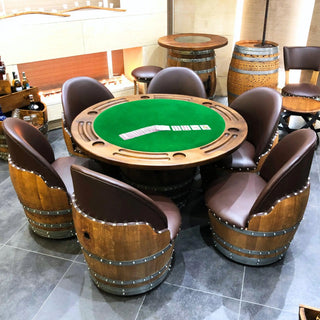
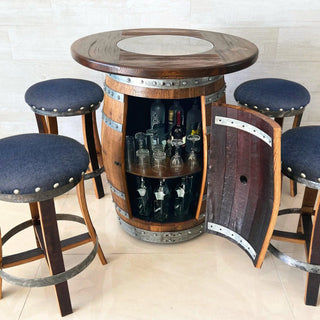
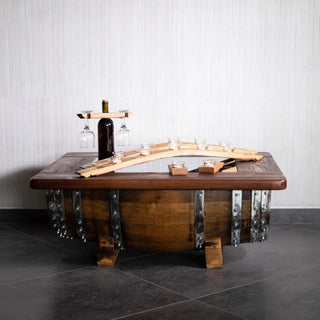
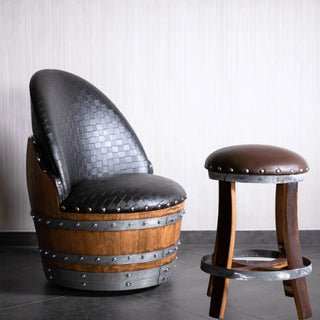
Oak furniture darkening over time is a natural process driven by three factors: UV light exposure, oxidation of the wood's tannins and oils, and gradual interaction between the surface and the spar varnish or oil finish above it. Reclaimed Bordeaux oak from a wine barrel typically darkens by 15-25% in the first 2 years of indoor use, then stabilizes for the next 10-15 years, then continues a slower deepening for the life of the piece. Some owners want to preserve the original lighter tone; most learn to prefer the deeper patina that develops. The Q&A below covers the most common questions our family workshop fields from owners watching their piece change. For more about how we think about wood and longevity, visit our family page at obarrel.com.
The short version: color change is not damage. It is the wood doing what oak does. The decision point is whether to slow it (UV management), accept it (patina embrace), or reset it (refinish - see post #87).
What causes oak furniture to darken over time?
Three causes, ranked by impact:
-
UV exposure is the largest single factor. Sunlight - even diffused indirect sunlight through a window - oxidizes the wood's tannins and breaks down the surface compounds in the finish. UV alone can darken oak 10-15% in the first 6 months in a sunny room.
-
Oxidation happens with or without UV. Oxygen in the air slowly reacts with the wood's natural oils and tannins, producing a deepening of the warm brown tones. This is the same chemistry that makes a freshly-cut apple turn brown, just much slower.
-
Finish interaction is the third factor. Spar varnish, tung oil, and wax all develop their own patina over years. The cumulative effect on the underlying wood color is real but smaller than UV and oxidation.
Is this damage I should worry about?
No. Color change is wood behavior, not wood damage. Damage looks like cracking, splitting, finish peeling, hoops loosening, or visible staining from spills. Darkening is none of those things.
The misread happens because we are conditioned to think of "new" as "good." A 5-year-old reclaimed oak piece looks meaningfully different from how it looked on delivery day, and the change can feel like decline. It is the opposite - it is the piece settling into its mature appearance.
How much will it actually change?
Year-by-year, our internal records on returning customers — tracked via side-by-side photographic comparisons of pieces returned for refinish service, sample size of roughly 60 pieces across the 1,527+ Etsy sales in our workshop history — suggest:
- Year 1: 8-15% darkening (most visible change in the first 6 months)
- Year 2: another 5-10% (total 13-25% from new)
- Year 5: another 3-5% (total 20-30% from new)
- Year 10: another 2-3% (total 25-33% from new)
- Year 15+: stabilizes; very gradual continued deepening
The first year is when most of the change happens. If you see substantial change in year 1 and worry the piece will keep darkening at that rate, it will not. The curve flattens.
Does it darken evenly across the piece?
Almost never. The piece darkens fastest where it gets the most UV. A wine barrel bar against a wall with a south-facing window gets uneven darkening - the wall side stays close to original tone; the room side darkens faster. Over 5-10 years this can become visually noticeable.
The fix (if you want even darkening): rotate the piece 180 degrees every 12-18 months. Most owners do not bother. Some prefer the rotation; others prefer the asymmetric story (the side that "lived in the light").
Can I prevent darkening?
You can slow it, not stop it. The options:
- Reduce UV: window film (UV-filtering, applied to nearby windows), light-blocking curtains, or relocating the piece away from direct sun
- Reduce surface oxidation: a yearly wax coat slows the surface interaction (we have mixed feelings on wax over spar varnish; see post #40)
- Reduce ambient oxidation: not practical for indoor furniture
In real terms, only UV management makes a meaningful difference. A piece kept in a low-UV room (interior basement bar with no windows, low ambient light) can stay close to original tone for 5-7 years. A piece in a sun-facing lounge will darken on the typical curve regardless.
Should I refinish to bring back the original color?
Usually no. Refinishing (light sand + re-coat spar varnish; see post #87) restores the surface clarity and depth of the finish, but does not restore the underlying wood color. The oxidation is in the wood itself, not just on the surface.
To actually restore original color, the piece would need to be sanded to bare wood (removing finish + the oxidized surface layer of the oak), then re-stained and re-finished. This is a major shop-level process and is rarely worth doing on a reclaimed oak piece, because the variation that develops over time is exactly what makes reclaimed oak desirable to most owners.
The honest answer: if you wanted the piece to look new forever, reclaimed oak was not the right material. Reclaimed oak is a material that ages visibly. That is the feature.
When does the color change become a problem?
Almost never aesthetically. It can become a problem mechanically if:
- The darkening is dramatically uneven (10%+ tonal difference within 24 inches) and you find it visually distracting
- The piece sits next to other oak furniture that is darkening at a different rate (the contrast becomes unmistakable)
- The piece is in a designer-controlled environment where the original tone was specified to match a palette
For the third case, designers sometimes spec a matte UV-protective coating over spar varnish to slow change. We can apply this on request at build time.
How does reclaimed oak age differently from new oak?
Reclaimed Bordeaux oak from a wine barrel has already aged 50-80 years before becoming furniture: the staves came from oak trees harvested for cooperage, dried, formed into a barrel, and used to age wine for 5+ years. By the time the barrel becomes furniture, the wood has gone through:
- Initial drying-and-stabilization (1-2 years at cooperage)
- Wine contact (5+ years; the wine impregnates the inner staves with tannin and color)
- Air-drying after barrel retirement (6-12 months)
- Furniture fabrication
This means the wood starts more stable and more saturated with color than new oak. Furniture made from new oak darkens more dramatically over its first 5 years than furniture made from reclaimed oak. Reclaimed oak has already done most of its color development.
How does this affect resale or insurance value?
It doesn't, in either direction. Reclaimed oak pieces hold value because of the material's narrative (the wine-aged source, the cooperage craft) and the workshop's reputation, not because of pristine new-condition tone. A 10-year-old piece in good structural condition is worth its original price or slightly more, depending on workshop reputation — 1stDibs and Chairish, the two largest US secondary marketplaces for craft and vintage furniture, both publish category-level pricing data showing reclaimed-wood and craft-cooperage pieces holding value at or above original retail across 5-15 year horizons.
Insurance appraisals for high-end pieces typically use replacement value, not condition-adjusted value, for reclaimed-oak craft furniture. The patina is considered part of the piece, not a depreciation.
What should I do if I want to embrace the patina?
Practical guidance:
- Stop comparing to new-condition photos. Comparison is the source of dissatisfaction. The piece is becoming what it is supposed to be.
- Take seasonal photos. A photo every 6 months for the first 2 years shows the change as a story, not a loss.
- Rotate occasionally if you want even tone, or let it asymmetric if you want the "lived" look.
- Add complementary aged objects. A 10-year-old barrel piece next to a 1-year-old barrel piece can read as mismatched. A 10-year-old barrel piece next to other aged objects (leather, brass, patinated metal) reads as deliberate.
- Refresh the finish, not the wood. Every 5-7 years, a light spar varnish re-coat refreshes the depth of the finish without altering the underlying tone.
The owners who write us at the 10-year mark to say the piece looks better than ever are almost universally the ones who let the patina develop. The owners who write at year 2 worrying about color change are usually the same owners who, 3 years later, write again to say they have come around. This is workshop-observed pattern, not a controlled study — we offer it as the family-workshop honest read, not as published research.
The peer-reviewed background on UV-induced oxidation of oak tannins is well-covered in Wood Science and Technology (Springer), which publishes the standard photodegradation studies on European white oak.
For more on our workshop's perspective on wood and longevity, see our family page at obarrel.com. For the technical care series, see our 12-month care calendar for indoor barrel furniture, the P7 pillar hub.