
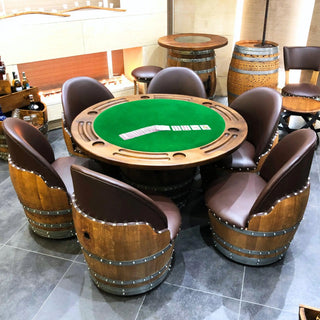
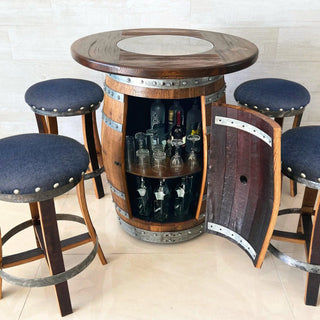
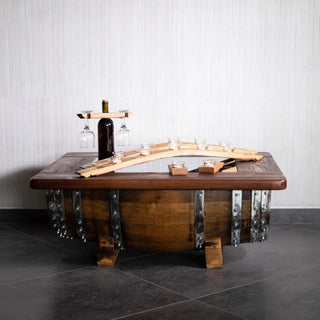
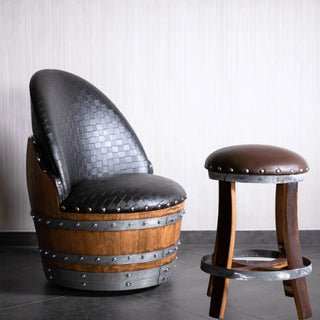
The target for a long-term wine cellar is 55°F (13°C) with 60–70% relative humidity, held stable year-round, with minimal vibration and no direct light. That is the consensus from wine-science programs at UC Davis and from the working cellars at first-growth Bordeaux châteaux [Source: UC Davis Department of Viticulture and Enology, wine storage and aging guidance, viticulture.ucdavis.edu]. The same conditions that age wine well also happen to be conditions that reclaimed-oak furniture tolerates beautifully — which matters if you are storing wine inside or around our reclaimed-oak wall wine racks. This guide walks through the targets, the tolerances, and the eight questions we get most often from customers about climate and furniture together.
A note on what "cellar" means in 2026: most of our customers do not have a dug-out basement room. They have a converted closet, a wine fridge stack, a sunroom-adjacent nook, or a dedicated cabinet built around a barrel display. The principles are the same. Stability beats perfection. A steady 60°F is better than a fluctuating 55°F.
The Targets, in One Place
| Variable | Target | Acceptable Range | Critical Threshold |
|---|---|---|---|
| Temperature | 55°F (13°C) | 50–60°F (10–16°C) | Below 45°F or above 68°F sustained |
| Relative humidity | 65% | 55–75% | Below 50% or above 80% sustained |
| Daily temperature swing | <2°F | <5°F | >10°F |
| Annual temperature swing | <5°F | <10°F | >15°F |
| Light | Dark | Indirect dim | UV exposure |
| Vibration | None | Minimal | Constant (motors, foot traffic) |
These targets are for long-term aging of bottles intended to be held five, ten, or twenty years. For wines you will drink within twelve months of purchase, you can be considerably more relaxed — a steady 60–65°F with 50% humidity is fine.
What Reclaimed Oak Can Tolerate
The wine barrels we work with in our family workshop are Bordeaux-type 53- to 59-gallon, originally built to live in working winery cellars at exactly the conditions above. Their natural tolerance is wide:
- Temperature: 40°F to 80°F sustained, with no structural change.
- Humidity: 40% to 80% RH; below 30% sustained will eventually dry the wood and risk stave separation if the barrel were still hooped under pressure. As furniture, the staves are screwed and the hoops are tacked, so the risk is cosmetic (slight gapping) not structural.
- Daily swings: the spar varnish finish we apply provides moisture barrier; the wood underneath has already lived through five-plus years of vintage cycling at the winery before reaching our shop.
In other words, the conditions a serious wine cellar requires are the conditions our furniture was born in. If your room is fine for the wine, it is more than fine for the oak.
Q&A: The Eight Questions Customers Ask Most
Q: What happens if my "cellar" runs warm — say, 65 to 68°F year-round?
Wines age faster at warmer temperatures. A bottle at 65°F ages roughly twice as fast as the same bottle at 55°F. For wines built to age (top-tier Bordeaux, Barolo, Vintage Port, age-worthy Napa Cab) this is suboptimal — you lose the slow-development window. For wines intended for near-term drinking (90%+ of the market), 65°F is genuinely fine, especially if it is stable. The killer is not warmth; it is fluctuation.
Q: What about humidity below 50%?
Below roughly 50% RH sustained, natural cork can begin to dry out, shrink, and admit oxygen — accelerating oxidation. The first sign is wicking (wine moving up the side of the cork). For short-term storage (under 6 months) this is rarely a problem; corks have a buffer. For long-term storage, target 60–70% RH and consider a small humidifier or a tray of water inside a closed cabinet. Synthetic and screw-cap closures are unaffected by humidity [Source: Cork Quality Council technical guidance on relative humidity and cork seal integrity, corkqc.com; APCOR (Portuguese Cork Association), cork storage recommendations].
Q: Is humidity above 75% bad?
Above roughly 75% RH sustained, you risk mold growth on labels, capsules, and any organic material in the room — including wood shelving and stave racks. The wine itself is unharmed. Damage is cosmetic but real: collectible labels lose value if mottled. If your cellar consistently runs humid, increase air circulation (a small low-vibration fan), run a dehumidifier set to 70%, or accept the label risk.
Q: How much daily temperature swing is too much?
Under 2°F per day is ideal. Under 5°F is acceptable. Beyond 5°F, the wine inside the bottle expands and contracts with each cycle, pumping air past the cork and accelerating oxidation. This is the single most common failure mode in informal storage: the corner of the kitchen that swings from 62°F at 6 AM to 74°F at 6 PM because of cooking and afternoon sun. Move the bottles, or buy a wine fridge.
Q: How do I monitor temperature and humidity?
A $15 hygrometer-thermometer combo with min/max memory is enough to start. Place it on the middle shelf of your storage, away from the door. Check it weekly for the first month, monthly thereafter. If you want data, a Govee or SensorPush Bluetooth sensor logs continuously to a phone app — useful for catching the 3 AM HVAC cycle you would otherwise miss. We recommend logging for at least one full month before you assume your "cellar" is what you think it is.
Q: Does light actually damage wine?
Yes. UV light degrades wine compounds — particularly in sparkling, rosé, and lighter whites in clear glass. The damage is called "lightstruck" and shows up as a wet-cardboard or burnt-rubber note on the nose. Reds in dark glass are partially protected but not immune. Store bottles in the dark, or behind UV-filtering glass if your storage is on display. The amber and dark green glass most fine wines arrive in is itself a UV filter, but it does not block 100% of damaging wavelengths [Source: Decanter, "Lightstruck wine: what it is and how to avoid it"; American Journal of Enology and Viticulture, research on riboflavin photo-degradation in wine].
Q: Should bottles be stored on their side?
Bottles closed with natural cork should be stored horizontal so the wine keeps the cork hydrated. Bottles with screw caps, glass closures, or synthetic stoppers can be stored upright with no penalty. For natural cork: horizontal is non-negotiable for storage longer than 60 days. Stave racks, X-racks, and individual bottle cradles all accomplish this. Our wall-mounted reclaimed-oak racks hold bottles at the correct angle for cork contact.
Q: Can vibration really damage wine?
Constant low-frequency vibration (a compressor pad, a washing machine on the other side of the wall, a furnace blower mount) can disturb the slow process of sediment integration in aging reds and is theorized to dull aromatic development over years. The effect is subtle and contested; the practical takeaway is to avoid storing your aging collection on top of a refrigerator, washing machine, or HVAC plenum. Foot traffic, occasional door slams, and household sound are not a concern [Source: Wine Spectator, ongoing storage advice columns on vibration and aging, winespectator.com].
Q: My furniture is in the same room as my wine. Will the humidity hurt it?
No — provided the room is in the acceptable range above. Reclaimed-oak furniture, especially pieces we finish with spar varnish, is comfortable at 50–75% RH. Below 30% sustained, you may see minor gapping at joints; above 80% sustained, you risk surface mildew on any unsealed bottom surface. Sealed, finished furniture in a properly maintained cellar will last generations — the wood was already curing for decades before we got it.
Q: Do I need a dedicated cellar to drink well at home?
No. Most of our customers store actively-drunk wine in a wine fridge or a wall-mounted reclaimed-oak rack at room temperature and reserve cellar conditions only for bottles they intend to hold for 5+ years. The rule of thumb: anything you will drink in 12 months can live at 60–68°F if it is stable. Anything you intend to age needs the 55°F / 65% RH window.
What This Means for Furniture Placement
If you have a real cellar (basement room held at 55°F, 65% RH), our reclaimed-oak racks, stave displays, and barrel cabinets are entirely at home. They were built for that environment.
If your wine storage is in a living area — sunroom, library, dining room, basement bar — focus on:
- Keeping the furniture out of direct sun (UV both fades the wood finish over years and lightstrikes any displayed bottles)
- Maintaining 50–70% RH; a small ultrasonic humidifier in dry winter months extends both wine and wood lifespan
- Avoiding placement against an exterior wall in extreme climates (radiant cold or heat through the wall affects bottle temperature first, furniture second)
A Practical Starter Plan
For a customer building their first serious storage from scratch:
- Buy a $15 thermometer-hygrometer with min/max memory and log for one month in the planned storage location.
- If the data shows under 5°F daily swing and 50–75% RH, you are ready to install racking. Our wall wine racks install in an afternoon and hold bottles at the correct cork-contact angle.
- If the data shows wider swings, install a small wine fridge (28- to 56-bottle) for aging-grade bottles; use the open racks for drinking-grade rotation.
- Reassess yearly. Seasonal changes — summer humidity, winter dryness — are the most common surprises.
A properly stored bottle of age-worthy wine can develop for decades. Reclaimed Bordeaux oak — properly finished — lasts longer than that. Treat the room well and both will reward you.
For more on the spaces wine lives in, see our pillar hub on wine stave rack display ideas — the broader P3 wine-lifestyle guide — and our companion open-bottle storage guide for barrel cabinets. When you are ready to add storage, the wall wine racks collection is the first piece most customers add.